

The $1.75 Trillion Receipt Nobody Read
The SpaceX S-1 tells you exactly what you're buying. Almost nobody is going to read it.

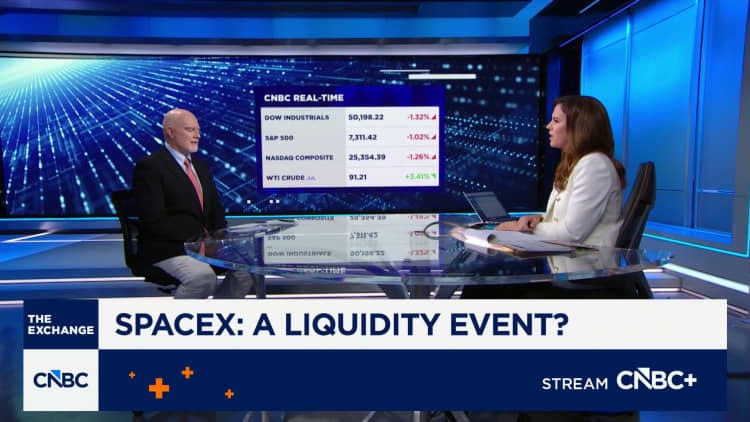
[EDITORIAL NOTE — This was written at night on June 11th. At that time, the deal price was reported to be in the range: ~$135/share, ~$75B raise, ~$1.75T valuation. Depending on when you read this, that might have changed.]
This morning, SpaceX completed the largest initial public offering in history.
Not the largest tech IPO. Not the largest American IPO. The largest IPO. Saudi Aramco held the record at $25.6 billion raised in 2019. SpaceX is taking roughly $75 billion at a valuation near $1.75 trillion — three times the old record, set by an actual nation-state selling its actual oil.
By tonight, everyone you know will have an opinion about SPCX. The opinion will come from one of two factories. Factory one: this is the grift of the century, a loss-making company at an obscene valuation, run by a man who treats public markets like a personal ATM. Factory two: this is the opportunity of a generation, your one chance to own the company that owns the future, finally democratized for the ordinary investor.
Both factories are wrong, and they’re wrong in the same way. Neither one read the receipt.
Because that’s what an S-1 is. A receipt. It is a legal document that tells you, with the kind of precision that only the threat of securities litigation can produce, exactly what you are paying and exactly what you are getting. Narratives lie. Podcasts lie. Your brother-in-law lies.
The S-1 does not lie.
Because lying in an S-1 is a felony.
So let’s read the receipt.
What you’re paying
A $1.75 trillion valuation against $18.7 billion in 2025 consolidated revenue. That is roughly 94 times sales. Not earnings — sales. There are no earnings. SpaceX lost $4.94 billion last year.
Sit with the comparison for a second. Aramco came public on the back of the most profitable enterprise in human history — a literal license to pump money out of the ground. SpaceX is coming public on the back of a $5 billion annual loss, and it’s raising three times as much. That’s not a criticism. It’s an observation about what is actually being sold, which is not a cash flow.
It’s a trajectory.
What you’re getting
Here is where the receipt gets interesting: the answer comes in three parts, each printed in perfectly legible ink.
Part one: the cash machine. Inside SpaceX, one business reliably makes money — Starlink, which generated $4.42 billion in operating income last year. Everything else is a bet. The launch business is a marvel of industrial engineering that mostly exists to deploy more Starlink. Starship is a prototype with a 7-and-5 record across twelve flights. So when you buy at $1.75 trillion, you are paying roughly 400 times the operating income of the only segment that produces any.
Part two: the anchor bolted to the cash machine. SpaceX absorbed xAI this year, and xAI lost $6.4 billion at the operating line — meaning the AI division consumed every dollar Starlink earned, and then another two billion on top. You are not buying a satellite internet company. You are buying a satellite internet company that has been legally welded to a frontier AI lab in a capital-burning war with competitors funded by the profitable cores of Microsoft, Google, and Amazon. The receipt also notes, in passing, that of xAI’s twelve original co-founders, two remain.
Part three — and this is the part to read twice: the governance. The share you can buy tomorrow is Class A. It carries one vote. Class B shares carry ten. Elon Musk holds roughly 42 percent of the equity and, through Class B, roughly 80 percent of the votes. He is the CEO, the CTO, and the Chairman of the Board, and under the structure described in the filing, he can be removed from those roles only by a vote of the Class B shareholders.
He controls the Class B shareholders.
Run that clause through one more time. The mechanism for removing the chief executive is a vote held among shares the chief executive controls. This is not a loophole someone might exploit someday. It is the explicit, disclosed, intended design. The public is being invited to contribute $75 billion to an enterprise over which it will hold, as a matter of binding corporate law, zero control authority. Your Class A share is not a piece of the company in any sense your grandfather would recognize. It is a perpetual, non-voting participation certificate. A claim on outcomes with no claim on decisions. Closer to a bet slip than a deed.
This is not a scandal
Now — the part both opinion factories miss.
None of this is fraud. Fraud is concealment, and this is the opposite of concealment: it is several hundred pages of plain-English disclosure filed with the federal government and available to anyone with an internet connection. The dual-class structure isn’t even novel. Ford did it in 1956. Google did it in 2004. Meta did it in 2012. Each time, the market grumbled, bought anyway, and the next founder noticed. The ratchet only turns one direction, because it works.
So the “grift” take collapses on contact with the filing — you cannot be swindled by a document that tells you precisely what it’s doing. But the “democratization” take collapses just as fast, and the proof is sitting in the deal structure itself.
This offering is reported to be three-and-a-half to four times oversubscribed. Demand is above $250 billion against $75 billion of supply. Institutions could (and most certainly will) absorb every single share before lunch. And yet the deal includes a carve-out specifically reserved for retail investors — ordinary people, buying through their apps, at the offering price.
Why? When the share is scarce, why hand any of it to the small accounts?
Because retail is the ideal shareholder for this structure. Institutions ask questions. Institutions show up at annual meetings, file proposals, and call the general counsel. Retail does none of that. Retail buys, holds, and stays quiet — which makes retail the perfect buyer for a share that has been pre-stripped of its voice. The retail tranche isn’t generosity, and it isn’t democratization. It’s product-market fit. They built a share with no vote, and they’re distributing it to the shareholders least likely to notice the vote is missing.
That’s the receipt, read in full. The largest IPO ever conducted is the sale of the smallest governance stake ever offered, distributed by design to the buyers least equipped to object.
The mirror
In 2019, when Aramco listed, American commentators permitted themselves a long, satisfied smirk. Look at this sovereignty theater — a kingdom selling a 1.5 percent sliver of its crown jewel while the royal family kept every lever, every decision, every vote. We called it an IPO in name only. We were right.
Tomorrow, the American market executes the same structure at three times the size. A sliver of economics sold to the public; every lever retained. The only difference is that the sovereign retaining control is not a kingdom.
It’s a man.
And he will hold the dominant Western launch capability, the dominant low-orbit communications layer — including Starshield, the variant your government’s national security apparatus runs on — a frontier AI lab, and, as of tomorrow, $75 billion of the public’s money, insulated from that public by a ten-to-one voting ratio. The institutions that were supposed to make ownership mean something — proxy votes, board accountability, the shareholder franchise itself — haven’t been overthrown. They’ve been formatted out of the document, one filing at a time, while everyone watched the rocket launches. This is why a growing number of families have stopped assuming the systems they participate in will represent them, and started building options that don’t require anyone’s permission to exercise.
Read your receipts
I want to be precise about the conclusion, because precision is the whole point of this piece.
I am not telling you SPCX will crash. I have no idea what the price does, and neither does anyone selling you a forecast. The stock may triple. Plenty of overvalued things stay overvalued for a decade; ask anyone who shorted Tesla.
What I’m telling you is what the document says. It says you are paying 94 times revenue for a loss-making conglomerate whose one profitable engine is fused to a furnace, governed by a man who cannot be removed by anyone but himself, sold preferentially to the buyers least likely to mind.
Every word of that is disclosed. That’s the most important fact in this entire story. The system isn’t hiding anything from you. It stopped needing to.
The receipt was printed. It was filed. It was public.
Nobody read it.
Bryan, I will not be a buyer in Space X for all the reasons you enumerated and one more…you’re making a bet on a guy on ketamine whose valuation is based on science fiction. In 2008, I spent a couple of days with Jack Ma and Joe Tsai of Alibaba who discussed bringing me on board as head of corporate comms. It was all very interesting but I didn’t join them for a number of reasons but it was not because I didn’t think they’d be successful…they already were. Fast forward to the IPO, I’m at a dinner with Barron’s managing editor who said he would not be a buyer of Alibaba because it was not like buying a share of GM, you got a share in a holding company in the Caribbean and, most importantly, they are Chinese and the government could change the game on investors…guess what happened? Alibaba hit a high of $330 at one point; after the government shut Jack Ma down, it now trades around $120. FAFO on playing games with valuations. I wish Elon all the worst going forward. This is the casino - Wall Street - shoving BS down our throats.
Ultimately this means that we may spend a generation trying to rip the deep roots of this grift from our economy and will fail because he will entrench himself as deeply as he can and leverage position, premium intelligence, and market power to shut down any challenge.