


I do not believe in theatrical protest.
I do not believe skipping stores or trending hashtags alters the behavior of a presidency that feeds on spectacle.
Most activism is catharsis.
I do not typically write about “what to do,” despite repeated requests. My work is diagnosis, not mobilization.
But occasionally, there is an action so narrow, so low-cost, and so structurally asymmetric that it could alter incentives at the margin.
This is one of those rare moments.
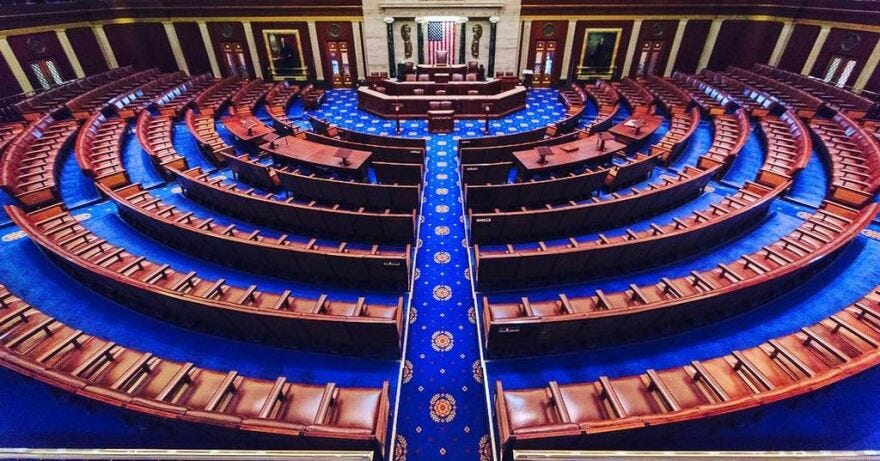
On February 24, Congress will assemble in joint session for the State of the Union.
I am asking you to contact your Senator and Representative and ask them not to attend.
Not as a stunt.
As an institutional boundary signal.
Why This Moment Is Different
The Supreme Court recently ruled that the President exceeded the statutory authority he invoked to impose sweeping tariffs.
The Court did not eliminate all presidential trade authority. It did not dismantle congressional delegation in its entirety.
It did something simpler.
It said: Under this statute, this justification fails.
In other words: there are limits.
The response was not restraint. It was escalation.
Alternate authorities were invoked. Tariffs were raised further. The rhetoric intensified.
Whether those alternate statutes survive judicial review is secondary.
What matters is the pattern:
Judicial constraint → public defiance → expanded assertion.
That is not a trade policy dispute.
That is an institutional stress test.
Why Tariffs Matter — Specifically
Tariffs are not abstract.
They are taxes.
And the Constitution is unusually clear about one thing: taxation originates in Congress.
When a President stretches emergency or trade authorities to impose sweeping economic burdens across the country — and then responds to judicial limitation with rhetorical dismissal — it lands in two places at once:
It challenges the Court.
And it diminishes Congress.
This is not about liking or disliking tariffs as policy.
It is about whether Congress is comfortable being bypassed.
Tariffs hit constituents directly — manufacturers, farmers, small businesses, consumers. They create price pressure and uncertainty.
Members of Congress feel that pressure in their districts.
Which is precisely why this issue is different from scandal politics or culture-war theatrics.
This one affects re-election math.
And when policy pain intersects with constitutional boundary, leverage appears.
The Political Reality
There are members of the President’s party who privately welcomed the Court’s ruling.
Not because they suddenly rediscovered Madison.
But because tariffs were becoming politically radioactive.
There are others not seeking re-election.
And there are members in competitive districts who cannot afford sustained economic backlash.
Private relief is not public courage.
But courage often begins when risk feels shared.
A visibly thinner State of the Union — particularly if it includes members of the President’s own party — would not end a tariff regime.
It would do something subtler.
It would signal that Congress is not merely a backdrop.
It would demonstrate that judicial rulings are not optional suggestions.
It would fracture the image of unanimous executive dominance.
Presidents who govern by spectacle rely on the optics of compliance.
Remove the optics, and the aura weakens.
Decorum is not attendance. Decorum is respecting institutional limits.
This Is Not About Embarrassment
It is about legitimacy.
The Constitution does not require members to attend a State of the Union in person.
For much of American history, Presidents delivered written reports.
The Republic functioned.
Attendance is ceremony.
And ceremony communicates consent.
If a member believes the President’s recent conduct respects the institutional role of Congress, they should attend proudly.
If they do not, attendance becomes a form of normalization.
Absence is not obstruction.
It is signaling.
If Congress cannot take even this minimal step, that too will be instructive.
The Ask
If you choose to act, keep it short.
Senator/Representative ______,
I am asking you not to attend the State of the Union.
The President’s recent actions regarding tariffs raise serious concerns about Congress’s constitutional role in taxation and the separation of powers.
If you believe this expansion of executive authority is appropriate, then we disagree.
If you do not, attendance signals acquiescence.
The Constitution does not require in-person attendance. Refusal would not impede governance. It would signal that Congress remains an independent branch.
I urge you to hold a town hall in the district instead.
Respectfully,
[Name]
No insults.
No slogans.
No theater.
Just institutional clarity. This message can be sent to either party cleanly. You can call, email, or write. If you don’t know who your members are, or how to contact them: (202) 224-3121. That is the number for the Capitol Switchboard. The US House of Representatives main line is (202) 225-3121.
Find your U.S. Representative (by ZIP code):
👉 https://www.house.gov/representatives/find-your-representative
Find your U.S. Senators (by state):
👉 https://www.senate.gov/senators/senators-contact.htm
From those links, you can find your member’s website page. Each office provides a contact form, and most also maintain district phone numbers.
Call if you prefer. Be polite. Be brief. Be precise.
You are not arguing policy. This is not about winning an argument. You are asking for a small, discrete institutional signal — that judicial rulings matter, that Congress is a co-equal branch, and that ceremony does not override constitutional limits.
Why This Matters
We are not at revolution.
We are at normalization.
Normalization of executive improvisation.
Normalization of rhetorical defiance toward judicial rulings.
Normalization of Congress shrinking itself voluntarily.
Erosion rarely looks dramatic in real time.
It looks procedural.
Polite.
Televised.
Sometimes the most effective response to spectacle is to deny it an audience.
This is not a call to fury.
It is a call to boundary.
The Republic will continue either way.
But occasionally, inches matter.
And this may be one of those inches.
Done. Thank you for providing the words.
Thank you for this. Just wrote both of my senators. Unfortunately I don’t have a representative right now because she’s the new governor of New Jersey. :)