

Hegseth’s Order Was Unlawful Before the Missile Even Left the Rail
And Parnas’ Framing Obscures Why

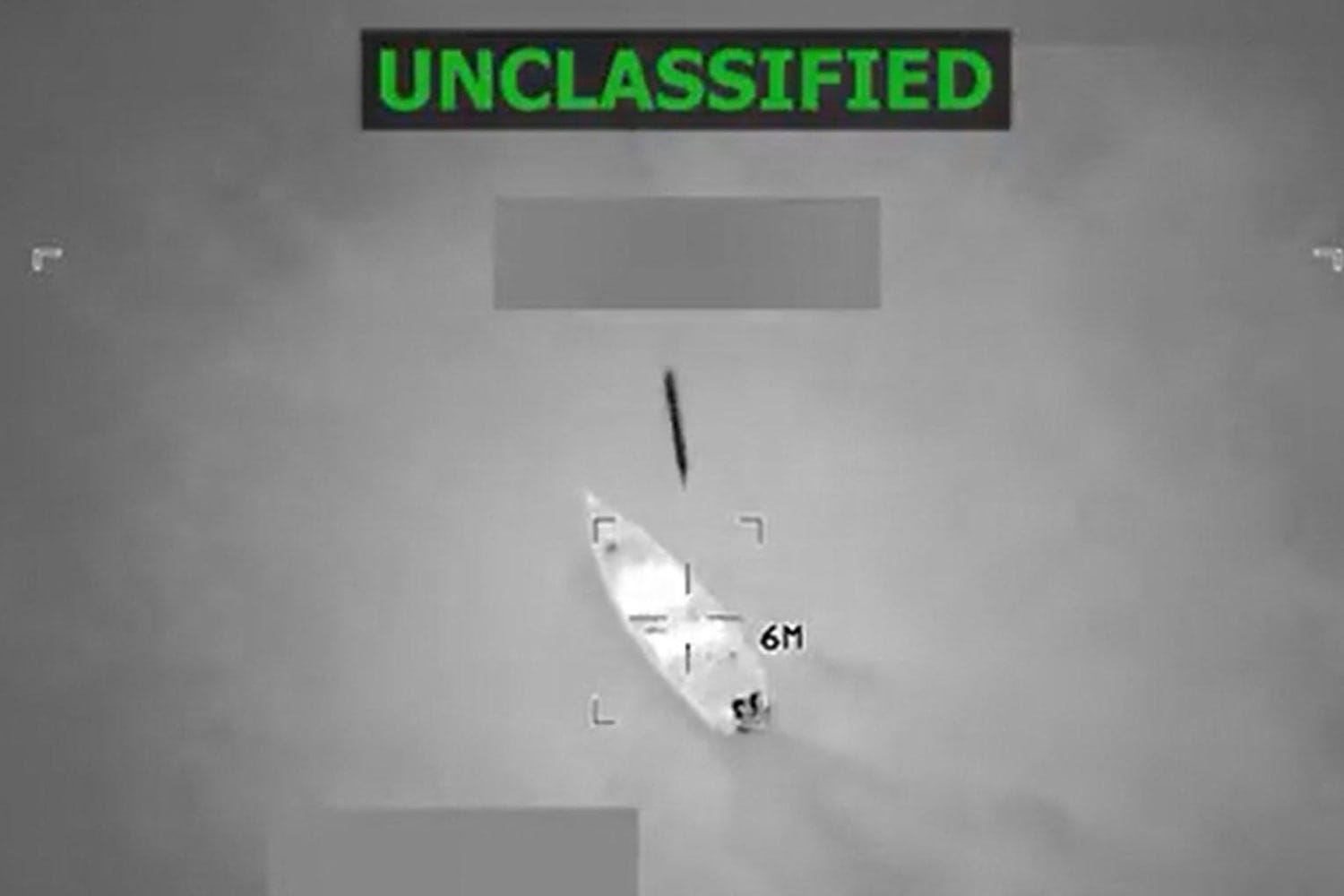
This reporting is explosive.
It’s actually the one time Aaron Parnas doing his usual “BREAKING” routine and hyperventilating might be justified.
I am an expert on humanitarian law, its normative provisions, and human rights law. And while Parnas is directionally correct about how bad this is, his legal analysis is fundamentally flawed — and it obscures the most important element of the story:
This is so much worse than denial of quarter.
1. IHL vs Human Rights Law: Parnas’ Category Error
Parnas jams international humanitarian law (IHL) and international human rights law (IHRL) into one bowl of soup and calls it “war crimes.”
It happens a lot. I’m going to presume that Parnas is not an international law expert, never had to deal with these things “up close,” and really isn’t being malicious.
But the conflation? That’s not just sloppy. It’s dangerous.
The entire reason the United States ended up outside the Rome Statute system was precisely this problem. Washington pushed and negotiated large parts of the treaty. But when it became clear that the court would blur:
wartime rules (IHL / law of armed conflict) and
peacetime rules (IHRL)
in ways that could criminalize lawful uses of force in armed conflict as “human rights” violations, the U.S. concluded it could not square the Rome Statute with our:
obligations under the laws of armed conflict,
constitutional structure, and
existing federal criminal statutes.
So we didn’t ratify. We do not accept ICC jurisdiction.
That was never because the U.S. “doesn’t care” about these norms. Quite the opposite. For decades, roughly 100 people across State, DoD, Justice, and the IC had full-time jobs interpreting and enforcing these rules. The U.S. has:
refrained from using force because LOAC analysis said it would be unlawful;
accepted casualties because we waited until hostile intent / hostile act was clear;
walked away from otherwise tempting operations because they couldn’t be squared with treaty obligations and U.S. law.
This is not a casual obligation. It has real operational teeth.
It may all sound to the outsider like “war crimes,” “crimes against humanity,” and “human rights violations” are interchangeable phrases for bad things. They aren’t. They live in different legal universes, with different triggers and consequences.
And in this case, that distinction matters — because what happened in the Caribbean fits none of these categories. What happened is considerably worse.
2. Before You Get to “War Crimes,” Ask the First Question: Is There a War?
Parnas runs straight to the Rome Statute and denial of quarter.
He skips the threshold question every U.S. JAG and operational lawyer is trained to ask:
Is there an armed conflict?
Here, the answer is: No. Absolutely not.
There is no international armed conflict (IAC) with Venezuela.
There is no non-international armed conflict (NIAC) with Tren de Aragua that any serious court would recognize.
There is no AUMF that authorizes a “war” on drug traffickers in the Caribbean.
If there is no armed conflict, then IHL does not apply.
You don’t get the LOAC toolbox if there is no war.
Instead, two other bodies of law govern:
International human rights law (right to life; prohibition on arbitrary deprivation of life), and
U.S. domestic criminal law.
That means the operative legal framework is not “Article 8, Rome Statute.”
It’s:
18 U.S.C. § 1111 — Murder
18 U.S.C. § 956 — Killing abroad / conspiracy to murder outside the U.S.
18 U.S.C. § 2441 — War Crimes Act (which internalizes Geneva when there is an armed conflict)
10 U.S.C. § 892 — UCMJ Art. 92 (unlawful orders)
And the whole doctrine of command responsibility under U.S. military law.
We don’t need the ICC to criminalize what happened.
We already did it, in our own code.
That fact alone makes these orders manifestly unlawful.
The legal stakes are considerably worse than Parnas suggests: this isn’t “maybe a war crime in The Hague.” It is straight homicide under U.S. law.
3. The Secretary of Defense Has No Business Issuing Tactical Orders, “Kill them all,” or otherwise.
Here’s where the entire narrative goes sideways.
Under 10 U.S.C. § 113, the Secretary of Defense is the President’s principal assistant for all matters relating to the Department of Defense and exercises “authority, direction, and control” over the department. That does not make him the tactical commander of SEAL Team 6.
Goldwater–Nichols (1986) rewired the system so that:
The President gives lawful military orders.
Those orders are transmitted through the Secretary of Defense.
They are executed by the Combatant Commanders (COCOMs) under 10 U.S.C. § 164.
The Chairman of the Joint Chiefs coordinates, but does not command.
The point was deliberate: take operational command out of the hands of whoever wandered into the Oval Office that day and put it in the COCOMs, who actually command forces.
The SECDEF:
sets policy,
transmits presidential orders,
oversees the department.
He is not supposed to be on the headset telling a JSOC strike cell whom to kill.
He has no independent authority to initiate offensive hostilities.
He has no business issuing a tactical “kill them all” order to a specific strike cell.
So even before you get to LOAC, target status, or hors de combat, any direct “kill everyone on that boat” command from Hegseth is:
Unlawful ab initio.
From the moment the words left his mouth.
It doesn’t matter if he thought they were traffickers, terrorists, or Martians.
He can’t give that order.
4. Even If You Pretend There Was a War, the Order Is Still Manifestly Illegal
Let’s be absurdly generous and assume, in extremis, that there was an armed conflict. Let’s further assume the people on the boat were “unlawful enemy combatants,” and that IHL applies in some limited way.
Even under that fantasy scenario, the order is still manifestly illegal.
The relevant law:
Geneva Convention I, Art. 12 / Common Article 3
Protects those “hors de combat” — wounded, shipwrecked, or otherwise incapable of defense.Geneva Convention II, Art. 12 & 18
Protects shipwrecked persons at sea and requires their rescue and humane treatment.Customary IHL, Rule 47
Prohibits denial of quarter — no “no survivors” orders.18 U.S.C. § 2441(c)(3) — U.S. War Crimes Act
Makes grave breaches of Common Article 3 (including murder and intentionally killing persons hors de combat) federal crimes.
Two men clinging to wreckage, burned and shipwrecked, are the textbook definition of hors de combat.
Ordering a second strike to kill them is not “controversial.”
It’s not “pushing the envelope.”
It is the exact scenario the law was written to forbid.
Layer on top:
they posed no imminent threat;
they were not in a recognized armed conflict with the U.S.;
they were physically incapable of mounting any attack.
There is no plausible theory under which that order is lawful — ever.
Every single person in the chain — Admiral, watch floor, targeteers, SEALs — had both a statutory and moral obligation to refuse.
That duty is spelled out in:
UCMJ Art. 92 — obligation to obey lawful orders and disobey unlawful ones;
UCMJ Art. 118 — murder;
UCMJ Art. 919 — war crimes (post-2023);
DoD Law of War Manual §§ 18.1.3 & 18.3 — clear guidance on unlawful orders and hors de combat protections.
This is LOAC 101. First-week stuff.
That nobody refused is a damning indictment of the culture.
5. This Makes Abu Ghraib Look Like Amateur Night
Everyone got (rightly) outraged over Abu Ghraib.
That scandal was:
a group of sadistic National Guardsmen,
in a badly run prison,
committing criminal acts on detainees in U.S. custody,
with senior officers asleep at the wheel.
It was horrific. It was also, in a grim sense, “bottom-up” criminality: NCOs and junior personnel abusing detainees with incompetent leadership failing to stop it.
This? This is something else entirely.
Here we have:
A Cabinet official,
in Washington,
allegedly giving a direct kill order.
A JSOC chain of command,
at Fort Bragg,
executing that order on live video.
A Tier One unit,
following through with a second strike
specifically to comply with “kill them all.”
Abu Ghraib was sadism and rot in the middle.
This is rot at the very top, passing cleanly through every level of command all the way down to the trigger-pullers, with nobody saying, “No.”
In that sense, Abu Ghraib is a walk in the park compared to this.
6. The Entire Chain Obeyed a Blatantly Illegal Order From Someone With No Authority to Give It
This should scare the hell out of you.
A civilian political appointee — not a COCOM, not the President — allegedly gave a direct, concrete kill order, and the system complied.
This is exactly the nightmare Goldwater–Nichols was designed to prevent: operational authority hijacked by political showmen.
And yet here we are.
So what’s an unlawful order now?
“Shoot the survivors”?
“Shoot the protestors”?
“Fire on civilians”?
“Firebomb Chicago”?
Because if the pattern here holds, the answer inside the system is:
“Welp… the Secretary said it. Guess we’re doing it.”
This is how democracies lose control of their armed forces.
Not with a dramatic coup, but with the quiet normalization of blatantly illegal orders being treated as just another day in the SCIF.
7. This Is a Matter for U.S. Courts, Not The Hague
Forget the ICC and the Rome Statute theatrics. They are a sideshow.
The relevant law is ours:
18 U.S.C. § 1111 — Murder
Willful killing of a human being with malice aforethought and no lawful justification.18 U.S.C. § 956(a)
Conspiracy to kill or maim abroad.18 U.S.C. § 2441
War Crimes Act — makes grave breaches of Common Article 3 (including killing the hors de combat) a federal crime.10 U.S.C. §§ 918–919 (UCMJ Arts. 118 & 919)
Murder and war crimes for uniformed personnel.10 U.S.C. § 892 (UCMJ Art. 92)
Duty to disobey unlawful orders.
And the key Supreme Court and military law precedents:
In re Yamashita, 327 U.S. 1 (1946) — command responsibility for unlawful killings.
Little v. Barreme, 6 U.S. 170 (1804) — officers gain no immunity from illegal orders.
Ex parte Milligan, 71 U.S. 2 (1866) — limits on military authority where war does not exist.
Ex parte Quirin, 317 U.S. 1 (1942) — when and how enemy belligerents may be targeted and tried.
Hamdan v. Rumsfeld, 548 U.S. 557 (2006) — even “unlawful enemy combatants” get Common Article 3 protections; you don’t get to summarize-execute them because you don’t like their status.
Boumediene v. Bush, 553 U.S. 723 (2008) — reinforces that the political branches don’t get a blank check to define people out of legal protection.
Every single one of these cases cuts against the idea that this strike was lawful.
If the reporting is accurate, this is not just “controversial policy.”
It is a crime.
8. The Question Every Officer Now Has to Answer
Parnas tries to make this about the ICC and denial of quarter.
His heart may be in the right place, but his law is wrong — and the truth is worse.
The real story is:
The Secretary of Defense allegedly ordered a strike he had no business tactically directing.
The people on that boat were not in an armed conflict with the U.S., making lethal force presumptively unlawful from the start.
The survivors were hors de combat, making their killing murder under any legal theory you like.
The entire chain of command complied.
The relevant law is U.S. law, not Rome Statute pageantry.
Hegseth shouldn’t just be the subject of angry tweets.
He should be the subject of a serious criminal investigation.
I believe he should be facing potential charges for murder under U.S. law — and every flag officer and operator in that chain should be answering hard questions under oath.
Because in the end, the core issue isn’t the ICC or some abstract “denial of quarter” doctrine.
It’s this:
What orders are you actually willing to refuse?
If the honest answer inside the Pentagon is “none,” then the United States military has already crossed the line from an institution under law, to an institution merely awaiting instruction.
And that should terrify everyone.
I am a US Navy Veteran. You are absolutely correct. Since the first open bottom boat was blown out of the water in the Caribbean & people onboard were killed it was & is murder. Firing upon & bombing occupied unarmed craft is illegal as it is. Rules of engagement do apply. Hegseth stating war on drugs & MAYBE those boats are carrying drugs certainly does not justify bombing, missiling or firing upon them & then murdering people in them while clinging to what's left. The military personnel doing this didn't stop and think about the multiple laws they are violating before launching fire, who was giving those orders & that they were following illegal orders. If they are charged & court martialed will do years in Leavenworth. The civilians involved need to see federal courts & prison.
Brilliant and compelling expository travel through the laws of war and solid arguments for criminal charges up and down the chain of command...one truly hopes that all of the killings in open seas — 83 and counting — are being thoroughly documented, and when at long last this fetid, law-breaking regime is turfed out, appropriate lawful authorities do the right thing and call to account all those culpable of wanton murders, no excuses proffered, especially "we were only following orders".
And, for god's sake, none of the usual BS about "turning the page"..."look forward, not backward"...and the worst of all, no "this will tear the country apart" punking out.