

6-3, 6-3, 6-3 ... Civil Rights Takes a Beating
When the law becomes theatre, and Supreme Court doctrine moves from stare decisis to "Nobis nihil prorsus curae est" the final pieces of the Republic fade from view.

Today, the Supreme Court handed down two immigration decisions, both 6-3, both written by Justice Alito, both — by an accident of docketing that no novelist would dare invent — captioned Mullin v. something. Mullin v. Al Otro Lado. Mullin v. Doe. The same name stamped on two different acts of subtraction, as if the machine had run out of variety and started reusing the label.
Read together, they tell you something more useful than either tells you alone. Not because the legal reasoning is novel. It isn’t. But because the instinct behind both — the reflex to find the cruelest reading the text will bear and call it plain meaning — is now the operating logic of an entire branch. And that branch is the last one to adopt it.
What the Court actually did
The first case is about a word. The immigration statute says a person may apply for asylum if they are “physically present in the United States” or if they “arrive in the United States.” For years, the second phrase did work: it covered the person standing at the port of entry, presenting themselves, asking for the process the law promises. The Ninth Circuit read it that way. Two judges who had spent their careers in immigration law read it that way.
Alito read it differently.
In ordinary speech, he wrote, no one would say that a person “arrives in” a place before the person enters that place. So the asylum seeker stopped on the Mexican side of the line — turned back by a U.S. officer standing on U.S. soil, told to wait in a country where waiting has gotten people kidnapped and killed — has not “arrived.” The statute neither entitles such an alien to apply for asylum nor requires an officer to inspect him.
This blesses a policy called metering, in which border agents turn away people who lack valid travel documents whenever they deem a port of entry full. The record in the case is not abstract. A CBP whistleblower testified that officers were instructed to lie to people — telling them the port was at capacity and turning them back — when, in fact, the facility retained sufficient capacity to process them. The government told the Court that metering remains a tool it would likely revive.
The Court said: fine.
The mechanism is the part to hold onto. The law’s duty to inspect and process is triggered by arrival. So if the government physically prevents arrival, the duty never loads. Sotomayor named it exactly: more people will die. She is not being dramatic. When the policy was last in effect, metering led to hundreds of cases of assault, kidnapping, and murder of people turned away at the border. Put a man at the door and then announce that no one has knocked.
The second case is about a different kind of door — the one marked “exit,” through which the courts are supposed to be able to look. Temporary Protected Status allows people from countries deemed too dangerous to return to legally stay and work for as long as the danger lasts. Haiti was designated in 2010 after the earthquake. Syria in 2012, because of the regime’s brutal repression of its own civilians. The administration moved to end both. Lower courts found the terminations were likely unlawful — that the Secretary probably violated the statute by ordering them without first consulting other agencies about actual conditions in those countries.
The Court’s answer was not “the conditions are fine.” The Court’s answer was that it is not allowed to ask. The text of the TPS judicial review bar, Alito wrote, clearly overcomes the presumption in favor of judicial review. Challengers cannot avoid that bar, he added, by creative pleading or clever lawyering. So the statute’s commands — shall consult, shall review country conditions — remain on the page, and become unenforceable in fact. Kagan’s dissent put it plainly: the majority blessed an assessment of conditions in two war-torn countries that rested on a single email. The State Department still lists both countries as “do not travel.” No part of Syria, it says, is safe from violence. None of that is reviewable now.
The tell
There was a moment in the TPS opinion worth pausing on, because it’s the whole thing in miniature.
The Haitian plaintiffs argued the terminations were racially motivated, and they had material to work with. Alito did not reproduce the President’s statements about Haitians in the opinion — a fact Kagan was quick to point out, describing the remarks as so repellent and racially inflected that the majority declined to put them in print. So she printed them herself. The line about Haitians “eating the dogs” and “eating the cats” and “eating the pets of the people.” Kagan wrote that the statements fairly shout, in their racial undertones and overtones alike, that race entered into the resolve to remove Haitians from the country.
The majority’s response was a small masterpiece of evasion. None of the statements was overtly racial, Alito wrote, and all expressed policy views that could rest on race-neutral justifications. Sit with the structure of that defense. It is not that the animus wasn’t there. It is that the administration was hostile to everyone — that it moved to strip protected status from thirteen of the seventeen countries that had it — and that a universal policy of doing this to all comers launders the specific contempt directed at one. If the cruelty is general, then the discrimination is invisible. Being horrible to everybody becomes a legal defense.
That is the reasoning of an institution that has stopped looking for the law’s purpose and started looking for its exits.
Why did these cases not need to be decided (this way, or at all)
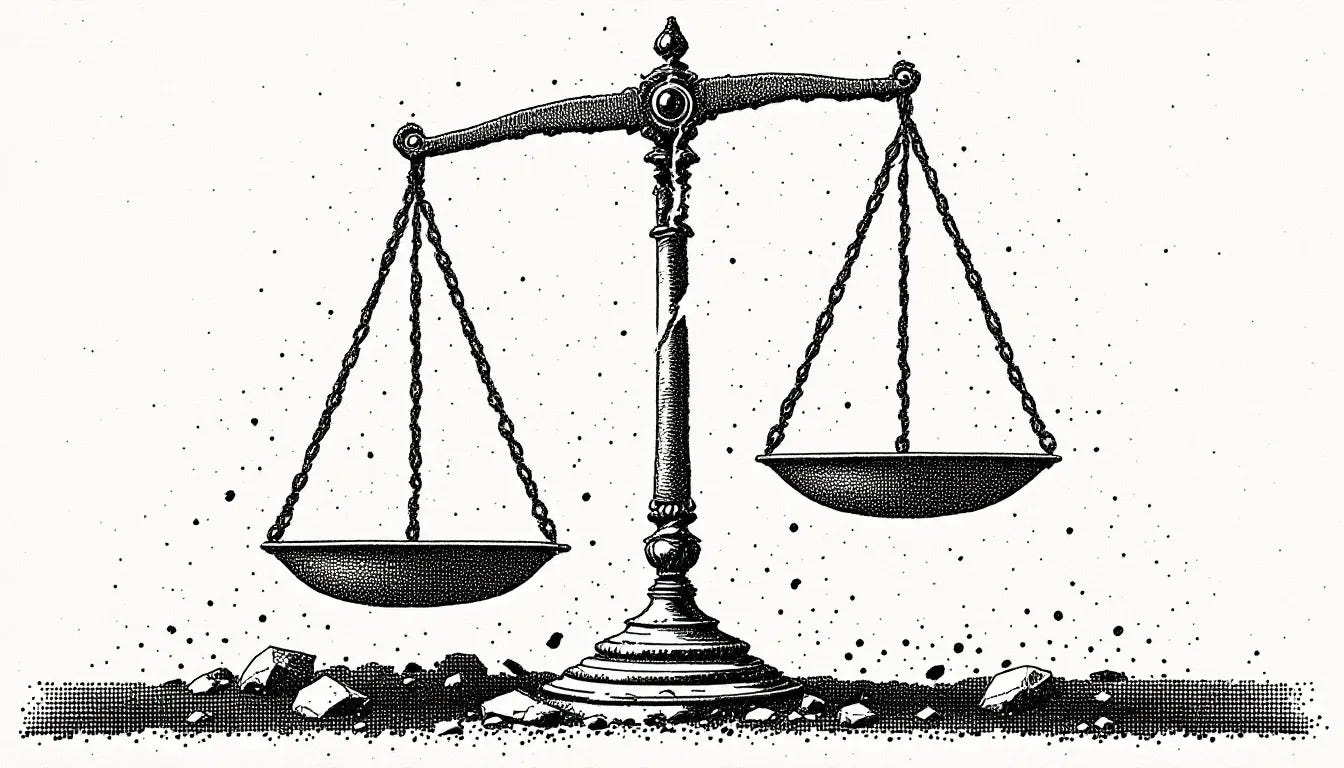
Neither outcome was compelled. That is the part to sit with. A court that wanted to read “arrive” to include the person standing at the port, asking, could have — two appellate judges did, and the statute’s own structure, which lists “arrives” separately from “physically present,” fairly demanded it. A court that wanted to police whether an agency followed the mandatory steps Congress wrote could have done that while still leaving the final judgment call unreviewed. The cruelest reading is a choice. It was available, and it was selected twice in one morning by the same hand.
And here is the thing: the legal commentary will mostly miss it because it treats the Court as the prime mover. It isn’t. The Court is downstream.
The metering policy wasn’t invented on Thursday. It began at the end of the Obama administration, was expanded and formalized under the first Trump administration, and was rescinded under Biden. The contempt for TPS isn’t a judicial doctrine; it’s a governing program that had already stripped status from more than 600,000 Venezuelans before these two cases were decided. The posture — no compassion as a feature, the closed door as policy, the deliberate engineering of conditions so the law’s mercy never triggers — was built in the executive branch and ratified at the ballot box. The Court is not leading this. It is the last institution to fall in line, lending the prestige of the marble building to a disposition the political branches arrived at years ago.
This is what makes “the Supreme Court has gone rogue” the wrong frame. Rogue implies a break from the rest of the system. What happened Thursday is the opposite of a break. It is a convergence — the judiciary completing a circuit the other branches already closed. The same instinct that meters a frightened family at a port of entry, that ends protected status by email, that reads a statute for its loopholes rather than its commitments — that instinct now runs the length of the federal government, and the one branch designed to interrupt it has instead joined it.
What it leaves standing
Notice what both decisions carefully preserve. They do not abolish asylum. They do not repeal TPS. Asylum law still stands; the person who manages to cross can still invoke it. TPS still exists; the statute’s standards are still printed. The structures remain intact, fully legal, like the storefront left standing after the robbery.
That is the more sophisticated cruelty, and it is the signature of a mature system, not a crude one. You don’t need to repeal the protection. You need only to control the door in front of it — who arrives, who’s reviewed, who’s seen — and then insulate that control from anyone with the power to ask why. The law becomes a building no one is allowed to enter. The mercy stays on the books, where it can be cited, admired, and never reached.
Two cases. One name. The same hand. The Court didn’t start the fire on Thursday. It just stopped pretending it would ever pick up the hose.
What it could mean for birthright citizenship
I have maintained, since these civil-rights cases were first granted review, that the Supreme Court did not take them up because it wished to reaffirm what had been our law for decades, or, in some cases, centuries.
These two decisions make that presumption harder to dismiss.
So what might this mean in Barbara v. Trump?
Alito’s newer move is not always to say, bluntly, that prior cases were wrongly decided, and then manufacture some grand theory to justify blowing them up, as the Court did in Dobbs, obliterating Roe & Casey, or in Loper Bright Enterprises v. Raimondo, where Chevron deference was folded, spindled, mutilated, and replaced with judicial supremacy wearing a textualist nametag.
The move is more surgical now. The Court takes words everyone understood yesterday and announces, with the serene confidence of men who never pay the consequences of their own constructions, that those words never meant what everyone thought they meant.
So when Barbara was argued, and everyone rushed to declare, “The Court seems to accept the Fourteenth Amendment. Wong is safe,” my response was: maybe. But I doubt it.
These two cases make clear why that doubt was not paranoia. It was pattern recognition.
Barbara turns on a simple phrase: “subject to the jurisdiction thereof.” The settled understanding has been that anyone born on U.S. soil, within the constitutional reach of the United States, is a natural-born citizen, regardless of lineage or ancestry, except for narrow historical exceptions like the children of foreign diplomats or occupying enemy forces. That is the rule of United States v. Wong Kim Ark. That is the constitutional settlement most people thought had survived every major attack against it.
Trump’s argument is, in essence: no. The executive gets to decide who is truly “subject to the jurisdiction” of the United States. And if the executive gets to decide that, the executive gets to decide who is born a citizen.
The Supreme Court did not agree to take this case because it was eager to pin a boutonniere on Wong and send it happily into retirement. The comforting noises at oral argument should not be mistaken for commitment. This Court has become very good at preserving the shell of a right while draining its operative meaning.
That is what Barbara is really about. Not whether the Fourteenth Amendment still contains the words “all persons born,” because it does. Not whether Wong Kim Ark still sits in the U.S. Reports, because it does. The question is whether the Court will now do to citizenship what it just did to asylum and TPS: leave the promise standing while moving the key just beyond the reach of the people who need it.
If “arrive” can mean “not yet arrived” because the government blocked the door, and if mandatory statutory duties can become unenforceable suggestions because review is inconvenient, then “subject to the jurisdiction” can be made to mean whatever exclusion requires. The Court may not flip Wong outright. It may not need to. It can hollow it out, distinguish it, domicile it, footnote it into a museum piece, and then announce that birthright citizenship remains fully intact for everyone still lucky enough to qualify after the new machinery has finished sorting them.
That is the lesson of these two Mullin decisions. The right survives. The human being does not reach it.
And the marble building calls the result law.
I think you're correct that birthright citizenship will be the next thing to be hollowed out to the point of non existence. Great piece of writing.
The six republicans on the court we have 5 racists and one Uncle Tom -when democrats get control of the government the first thing they need to do is expand the court -this is not a court but trumps own law firm and a court doing everything possible so republicans never lose control of the country