

You're Paying for a Data Center That May Never Exist
The buildout raising your electric bill is sized to demand that is mostly speculative — and the regulator built to stop exactly this kind of cost-shift has been reduced to signing off on it.

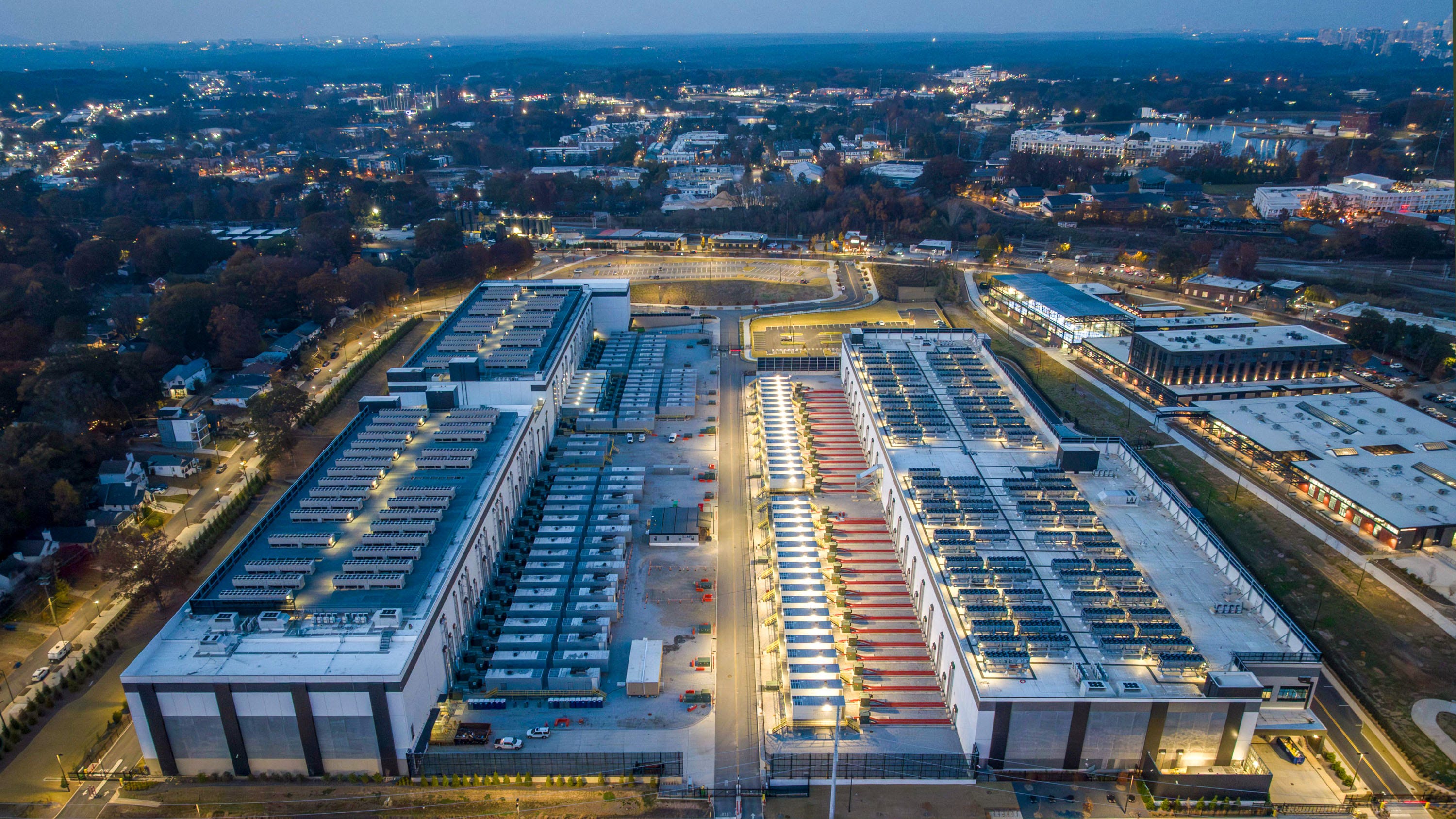
A great deal is being reported about data centers. Protest about their construction. How they’re going to “suck up every drop of water” (not true). How they’re going to completely destroy the environment (unlikely).
This story isn’t about any of that. It’s about something you probably care about considerably more: money flying out of your wallet.
In the first half of 2025, American electric utilities asked regulators for more than 29 billion dollars in rate increases — double what they sought a year earlier — and the increases on the table would affect 40 million customers. The reason given, again and again, is the data center. Utilities are fielding interconnection requests that defy comprehension: at least seven hundred gigawatts of new connection requests in 2025 — more power than the entire country draws on average at any given moment.1
The grid is being rebuilt at speed to handle a wave of computing load that arrived faster than anyone planned. That much is true, and you can read it anywhere.
Here is the part you won’t read anywhere. Most of that load does not exist. The Energy Information Administration’s own framing is that many of these projects will never be built — the seven hundred gigawatts is a queue of requests, not a fleet of facilities, padded by developers filing in five places at once to hedge a single bet.
And it does not matter.
The requests alone are enough to move your bill, because the moment a utility decides to plan for speculative load, the transmission lines and substations and transformers go into the rate base, and the rate base is paid by you.
You are not subsidizing data centers. You are subsidizing the possibility of data centers. The grid is being financed against a forecast, and the forecast is being treated as a fact because the institution that exists to separate the two has stopped doing it.
And that’s happening whether a data center is built in your community or not.
A regulated utility is a bargain, and the bargain has terms.
Begin with what an electric utility actually is, because the answer is the whole story.
It is a state-sanctioned monopoly.
You cannot shop for a different set of wires to your house; the law gives one company the exclusive right to run them. In exchange for that monopoly — and this is the load-bearing clause — the company submits to a public utility commission that is supposed to do two things: guarantee the utility a fair return on prudent investment, and protect the captive customer from paying for anything that isn’t prudent or isn’t theirs to pay for. The PUC is the referee. The rate case is the mechanism. “Used and useful” and “prudently incurred” are the standards. The entire legitimacy of letting a private company own a public necessity rests on that referee actually refereeing.
The bargain was designed for a particular world. Load growth used to be slow, real, and local — a new subdivision, a new factory, demand you could see and meter and verify before you built for it. The cost-allocation machinery assumes that world. It assumes that by the time a utility spends your money on capacity, the load justifying the spend is something more than a line in a spreadsheet filed by a counterparty who can walk away. That assumption is now false. And a referee operating under rules written for a game that is no longer being played does not referee. It rubber-stamps.
The cost-shift is not a side effect. It’s the mechanism.
Watch how the money actually moves, because this is the part that never makes the headline. A hyperscaler approaches a utility with a request for power on a scale comparable to that of a small city. The utility, whose profit is a regulated percentage of what it builds, has every incentive to say yes and build — its earnings are its capital expenditure, and a data center is the largest capital-expenditure justification to come along in a generation.
So it files a rate case for the transmission, the substations, the generation. The grid upgrade is real and the steel is expensive — transformers and cables and towers are running up against tariff exposure and a record eighty-six gigawatts of new capacity planned for this year alone.
Someone has to pay for it. And under the default rules, “someone” is the residential and small-business ratepayer, whose bill quietly absorbs the cost of infrastructure built for a customer he will never be and a load that may never materialize.
The Union of Concerned Scientists put one slice of that loophole at over four billion dollars in connection costs shifted onto the grid’s captive customers. That is not a market failure. A market failure is an accident. This is the machine working as currently configured: speculative load, a monopoly incentive to build, a captive base to bill, and a referee applying the wrong standard.
The same system that was designed to prevent brownouts before power plants were built now functions to ensure that capital is allocated for private enterprise for electrical loads that might never be realized.
The states noticed. The scramble tells you the compact is broken.
The clearest evidence that the bargain has failed is the panic to rewrite it. In the first six weeks of 2026, more than three hundred data-center bills were filed across thirty-plus states — a shift, in the span of a year, from luring these facilities with tax credits to fencing them out with moratoriums and special rate classes. New York, South Dakota, and Oklahoma floated pauses on construction itself. At least eighteen states moved to create separate rate classes so that large users pay their own freight. Illinois and Florida passed laws requiring data centers to fund the grid upgrades they trigger. Oregon’s commission established a large-load tariff to insulate existing customers. And the national association of utility regulators received a letter — cited up to the Senate — urging its own members to reject any proposal that raises household rates to serve data-center load, naming the problem in plain words: speculative, industry-driven growth, unfairly cross-subsidized onto the public.
Read that scramble for what it is. You do not pass three hundred emergency bills to fix a referee who is calling the game correctly. You pass them because the old rulebook stopped protecting anyone and everyone can see it at once. The compact didn’t bend. It snapped, and thirty state legislatures are now trying to bolt a new one together in real time, facility by facility, while the bills keep going up.
The populist read is wrong, and being wrong about it costs you.
Here is where the easy story fails, and it fails in the direction most people find satisfying. The satisfying version is that Big Tech is stealing your electricity, and the fix is to make Big Tech pay. Make them fund their own grid, and your bill stops rising. It is clean, it has a villain, and it is not true.
Consider Pennsylvania. PPL agreed to a settlement specifically adding data-center protections for ratepayers — a model, consumer advocates said, for the whole state. The same settlement raised residential rates 4.9 percent and tacked on a fifteen-dollar monthly fee, the utility’s first distribution hike since 2016. The protections went in, but the bill went up anyway. The data center is the accelerant. It is not the fire.
The fire is a grid that has been underinvested in for years, a regulatory model that can’t price risk, and a monopoly whose profit motive runs in exactly the wrong direction. Naming the hyperscaler as the thief feels like accountability, but it functions as cover — it lets the structural failure, an oversight regime that no longer oversees, walk out of the room while everyone glares at Amazon. You can win the fight against Big Tech’s cost-shift and still watch your bill climb, because the thing that’s actually broken was never the tenant. It was the building.
What actually happened, in one line.
Your electric bill is rising to finance a grid sized for a load that is mostly a forecast, because the referee that was supposed to keep a monopoly from billing you for someone else’s speculation is operating under rules written for a world that no longer exists — and has been reduced from protecting you to processing the paperwork. What this does to the price of power over the next decade, which regions break first, and who profits from the gap between the load requested and the load that arrives — that is a separate analysis, and not a free one.
So here we are. The monopoly was tolerated because someone was watching it. Someone is still in the chair. No one is still watching. The lights stay on. The question is who’s paying to keep them on for a tenant that never moved in.
For those already thinking through what that means personally — the Borderless Living community has been mapping this territory for two years. The conversation is here.
The 700 GW figure is the total of interconnection requests utilities reported fielding in 2025, not facilities being built; queues are heavily padded by speculative and duplicate filings, and most of this capacity will never come online. The comparison point — roughly 477 GW — is the United States' average electricity demand, the continuous power draw you get by spreading 2023's total annual consumption (about 4,000 terawatt-hours) evenly across all 8,760 hours of the year.
The two numbers are directly comparable because both measure power (gigawatts), not energy (gigawatt-hours): the request queue represents more instantaneous generating capacity than the country typically uses at once.
Peak demand — the hottest summer afternoon — runs higher, around 740 GW, which is the more demanding benchmark and roughly what the queue matches. Either way, the point stands: the requested load is on the scale of a second American grid.
So what is the solution? It should be illegal to price utilities based on projection. Why are we allowing monopolies? Would publicly owned utilities serve us better?
It does seem as if at least some data centers harm the environment. Dani Smart has a piece about a data center built in Mississippi that is causing some serious air pollution downwind in Memphis. If she is correct, that is a public health hazard. https://danismart.substack.com/p/memphis-and-the-price-of-someone