


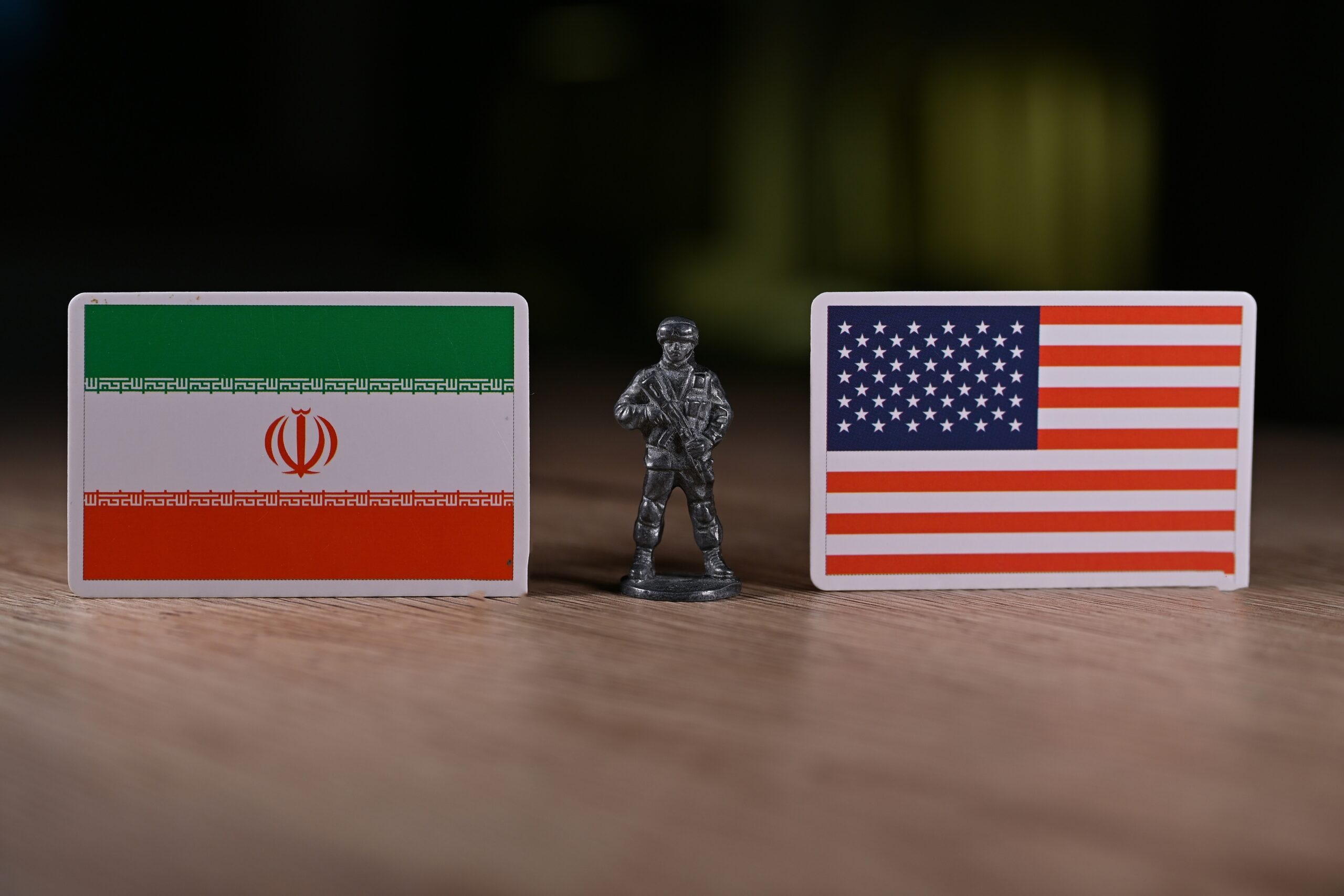
The war with Iran is approximately twelve weeks old, depending on how you count.
If you count from the February 28 strikes that killed Supreme Leader Ali Khamenei and the senior leadership of the Iranian government, the war is twelve weeks old. If you count from the June 2025 strikes on the nuclear facilities, the conflict in its current iteration is closer to a year. If you count from the broader posture that has shaped American policy toward Iran since 1979, this is the latest acute phase of a forty-seven-year rivalry that has periodically gone hot.
Twelve weeks. Khamenei and more than twelve hundred Iranian officials, soldiers, and civilians dead in the initial strikes. Thirteen American service members confirmed killed under Operation Epic Fury, with roughly four hundred wounded according to US Central Command data through mid-April. The Strait of Hormuz, closed by Iran on February 28, has remained effectively closed since: pre-war volume of about three thousand ships per month has fallen to roughly five percent of that. Brief windows of partial reopening followed ceasefire frameworks in April and early May and narrowed within days. QatarEnergy declared force majeure on LNG shipments on March 4 after Iranian strikes on Ras Laffan. Pakistan, Qatar, and Oman have mediated in various combinations. Two ceasefire frameworks have been announced. Both have been violated. The President has reportedly come close to resuming strikes at least once, then drawn back. Republicans pulled a House war powers vote yesterday because, according to their own leadership, they could not find the numbers to defeat it.
This is the configuration. Hold the configuration in mind, because the question that follows from it is not the question most commentary is asking.
Most commentary is asking which of two scenarios resolves the war. The first is decisive escalation — Iran retaliates dramatically, the US strikes back at full force, the conflict spreads regionally, Hormuz closes under direct military confrontation, oil prices spike to crisis levels, and the world economy enters a recession driven by the energy shock. The second is comprehensive resolution — a deal is reached, mediated by some combination of Pakistan, Qatar, Oman, or other parties, sanctions ease, the Strait reopens under credible security guarantees, Iran’s new leadership stabilizes, and the conflict winds down into a managed cold peace.
These are the scenarios most commentary war-games. The argument here is that neither is the most likely outcome — and that what is most likely is structurally distinct from both.
There is a third scenario, less written about because it lacks a climax. The war does not decisively escalate. It does not comprehensively resolve. It enters a routinized persistent conflict cycle, in approximately the configuration it currently occupies, for an extended period — most plausibly counted in years rather than months.
This is what is structurally most consistent with current observables. It is also what is already happening.
Consider the structural conditions required for the war to end through either of the more familiar scenarios.
Decisive escalation requires a triggering event large enough to break the current cycle architecture. The current cycle has absorbed three months of provocations — Iranian missile and drone strikes on US bases in Kuwait and Saudi Arabia, attacks on commercial shipping, US retaliatory strikes after warship engagements, repeated ceasefire violations — without escalating to regional war. Both sides have demonstrated the capacity to absorb provocations and re-stabilize at a slightly degraded equilibrium. Decisive escalation is possible. It is also what the system has so far metabolized rather than executed.
Comprehensive resolution requires political will to end the war on at least one side. The structural conditions for either side to generate that political will look weak as of this writing, though they could shift.
On the American side: the President spent four years promising to be tough on Iran. The strikes were the operational manifestation of that promise. Withdrawing — declaring victory and going home without a defined victory — is politically expensive. The administration that started the war cannot easily end it without a deal that looks like American success, and the conditions for an Iranian government to offer such a deal do not appear to exist. The alternative — actual withdrawal — registers domestically as weakness. The current configuration, in which strikes happen periodically and the President says the ceasefire remains in place, lets the administration avoid both withdrawal and full escalation while maintaining the posture of strength.
On the Iranian side: Khamenei was killed in the February 28 strikes. His son, Mojtaba Khamenei, has been appointed Supreme Leader. The succession was managed within the regime’s institutional architecture; the President’s characterization of “internal infighting” should be read as the assessment of an adversary, not as a confirmed state. Mojtaba Khamenei inherits both his father’s institutional position and the political logic that produced his father’s posture. The selectorate that elevated him is constituted by the same hardline factions that survived forty-seven years of sanctions, isolation, and periodic confrontation with the United States. Any new leader who concedes to American demands inherits the political cost of having conceded to the country that killed the previous Supreme Leader, who was also his father. The political space for concession has narrowed since the strikes, not opened.
Congress has tried, repeatedly, to constrain the war through war powers resolutions. The House failed on March 5 by a margin of seven votes, two hundred and twelve to two hundred and nineteen. The Senate advanced a resolution on May 19 by fifty to forty-seven. The House this week pulled a resolution vote because Republican leadership reportedly could not find the votes to defeat it. Each of these is closer than the last. None passes the veto math. A war powers resolution that passes Congress can be vetoed by the President, and the override math is not in either chamber’s current configuration. Congress as an institution can register that it does not approve of the war, and is gradually doing so. It cannot, on current numbers, end it.
The military-industrial apparatus has begun adapting to sustained engagement. Defense contractors are restructuring operational forecasts around prolonged Middle East presence. Energy markets are pricing the disruption as a sustained volatility input rather than a one-time crisis. European inflation forecasts have been revised upward to account for the energy shock. The Strait of Hormuz remains substantially closed, with periodic narrow exceptions for ships willing to pay Iranian tolls or negotiate safe passage. None of this looks like a system tilting toward resolution. It looks like a system stabilizing around persistent low-intensity conflict.
This is the structural argument. It is not a prediction of certainty. It is a claim about the most probable trajectory given current observables. Tail risks exist on both sides — a major shipping casualty, a strike on a US carrier, an Iranian nuclear reconstitution sprint, an Israeli political crisis forcing unilateral escalation, a leadership health event on either side — and any of those could move the trajectory toward either of the more familiar scenarios. The argument is not that those tail risks are impossible. The argument is that the median outcome, conditional on the current configuration, is persistence.
The historical pattern is what should anchor the rest of this analysis, though with category discipline.
The proper category for the Iran configuration is persistent low-intensity conflict, or protracted militarized rivalry — not frozen conflict. Frozen conflicts describe configurations where active hostilities have substantially ceased, frozen in place by armistice or stalemate. Korea, Cyprus, Transnistria. The Iran configuration is still active. The proper analogues are looser and more cautionary.
The Iraq sanctions and no-fly zone regime from 1991 to 2003 is the closest recent analogue. Twelve years of low-intensity conflict that became part of the international system’s background. Periodic strikes, periodic crises, sanctions architecture, mediated diplomacy, a regime that did not capitulate and a hegemon that did not withdraw. It ended, eventually, but it ended through external escalation — the 2003 invasion — not through internal resolution. The persistence broke when the political will to break it changed in Washington, not in Baghdad.
The Israel-Hezbollah configuration from 2006 onward is another. Nearly two decades of intermittent open conflict, ceasefires, proxy violence, deterrence equilibria. The war never formally restarted; the peace never formally arrived. The configuration consumed strategic bandwidth on both sides for a generation.
The post-2014 Donbas configuration ran for eight years before it dramatically escalated in February 2022. For those eight years, most international observers treated it as a quasi-frozen conflict that had stabilized. The eventual escalation came from changes in the strategic calculus of one side, not from gradual evolution of the local configuration.
What these analogues share is that the resolution mechanism, when it arrived, came from outside the local configuration: a change of administration, a great-power realignment, a leadership transition, an external shock. The configurations did not end through their own internal logic. They ended when external logic acted on them.
For the Iran configuration, the relevant external variables are: who holds executive power in Washington, who holds power in Tehran, whether the Iranian nuclear program reconstitutes faster or slower than the Pentagon’s two-year setback estimate, whether Israeli politics produces a government willing to unilaterally escalate, whether Saudi or Gulf state positioning shifts under sustained energy disruption, and whether the dollar’s reserve status pressures the financial sustainability of indefinite engagement. Each of these is a potential trigger for transition out of persistence. None of them is scheduled.
Persistence has costs that accumulate.
Thirteen American servicemembers have died under Operation Epic Fury so far. The number will likely grow if the cycle continues. Periodic strikes against a hostile regional power produce casualties; the cycle reproduces the conditions that produce them.
The taxpayer cost of sustained military engagement in the Middle East compounds. Brown University’s Costs of War project estimated the total cost of the Global War on Terror at roughly eight trillion dollars over twenty years. A persistent Iran configuration of similar duration, with higher-end military assets routinely deployed and more contested operational environments, could plausibly cost more — though the projection is sensitive to intensity assumptions and not a fixed forecast.
Energy markets are likely to continue pricing the persistence. European growth forecasts have already been revised down to account for sustained inflation pressure. Lower-income households in OECD countries will continue to spend a larger fraction of disposable income on fuel and transportation. Higher-income households will hedge or relocate where they can. The K-shaped economic pattern of the post-COVID era will likely deepen under sustained conflict-driven inflation, though the magnitude depends on whether Hormuz traffic recovers, on Saudi spare capacity utilization, and on US Strategic Petroleum Reserve management.
The 2028 election is unlikely to end this through routine electoral mechanics. A new president inheriting the war would find that the de-escalation pathway is more politically costly than the continuation pathway. Pulling out registers as weakness. Negotiating a comprehensive deal requires an Iranian leadership willing to make a comprehensive deal, and there is no scheduled point in the next four years at which Iranian leadership will be more willing than it is now — barring an external shock that changes the calculus. The next administration will most likely inherit the configuration and continue it with marginal modifications. This is what most previous administrations have done with inherited armed engagements, though not all.
The strategic opportunity cost is substantial. American strategic bandwidth that would otherwise be available for the Pacific theater, for European deterrence, for hemispheric stability, for technology and industrial competition with China, is being consumed by the Iran configuration. The cost is not visible because it is the cost of things that are not being done. It is the European posture that erodes because American attention is elsewhere. It is the Pacific deterrent that weakens because assets are forward-deployed elsewhere. It is the hemispheric concern about Venezuela, Cuba, or the consolidation of Mexican narco-state dynamics that does not get addressed because the war room is occupied.
For sovereign families, the practical implications differ under persistence from under either of the more familiar scenarios.
Under decisive escalation, the planning question is how to respond to dramatic dislocation — and the planning window is short. Under comprehensive resolution, the planning question is how to position for normalization — and the planning window is medium. Under routinized persistence, which is what the current observables most consistently support, the planning question is how to function inside a sustained background of elevated volatility for an indefinite period — and the planning window is long, ambiguous, and unforgiving of delay.
The volatility is in oil prices, in the dollar’s reserve currency premium, in the political bandwidth of the American executive, in the deficit math of a federal government simultaneously cutting taxes and funding sustained military engagement, in the credit-cycle architecture of a financial system whose institutional buffers have been deliberately reduced. These compound with the architecture of formalized patronage discussed earlier this week. None of these conditions reverses on the timeline that the next election affects.
The operational implication is that the sovereign architecture conversation, developed at length yesterday, has different inputs under routinized persistence than under either of the more dramatic scenarios. The optionality you build now will be activated against a backdrop of sustained elevated volatility, not against the backdrop of a discrete crisis. The timeline for using the optionality is longer. The conditions that would prompt activation are gradual rather than dramatic. The latency advantage of having built the architecture before you needed it is larger under persistence, not smaller, because the conditions never sharpen into an unambiguous signal that the architecture is required. They keep gradually deteriorating, with intermittent partial recoveries that look like normalization but aren’t.
Persistence is the configuration that punishes families who wait for the unambiguous signal. There is no unambiguous signal under persistence. There is only the gradually accumulating cost of decisions deferred while the situation incrementally degrades.
Wars end when actors with the capacity to end them choose to end them. No actor with that capacity is currently positioned to act in either direction on the timeline that would affect the current electoral cycle. That is not a permanent condition. It is the current condition.
The architecture you build, between now and the point at which the war’s persistence becomes a dominant variable in your family’s planning environment, is the architecture you will have when it does. The architecture you do not build is not available later. That is the practical implication of the third scenario.
The third scenario is structurally the most likely scenario, conditional on current observables. It is also the scenario almost no one is planning for.
This kind of analysis doesn’t exist without readers paying for it. No ads, no foundation, no outside agenda steering the work. If you want more, the upgrade is right there.
Agreed . Persistent fly swatting in a swamp is what we are facing . And.. it’s costing the globe a lot - pain across Asia . That’s cruelty induced by stupid strategy . Did they ( administration) not think about Hormuz ?
Then there is Cuba — cruel to not allow energy imports ..
Most cruel : ethnic cleansing in Southern Lebanon and Gaza under the pretext of a security brolly.. Israel is an apartheid state with Nazi like ambitions for territory.
The Iraq no-fly zone analogy is the one that sat with me longest. Twelve years of “background conflict” that most people stopped actively tracking within eighteen months. That normalization is itself a mechanism. When a war becomes ambient, the political will to end it erodes along with the public attention that might generate that will. Your “persistence punishes those who wait for the unambiguous signal” line is the one worth underlining.