

The War That Didn’t Require Permission
You Just Watched Your Government Start a War. Now Count the Hands That Approved It.

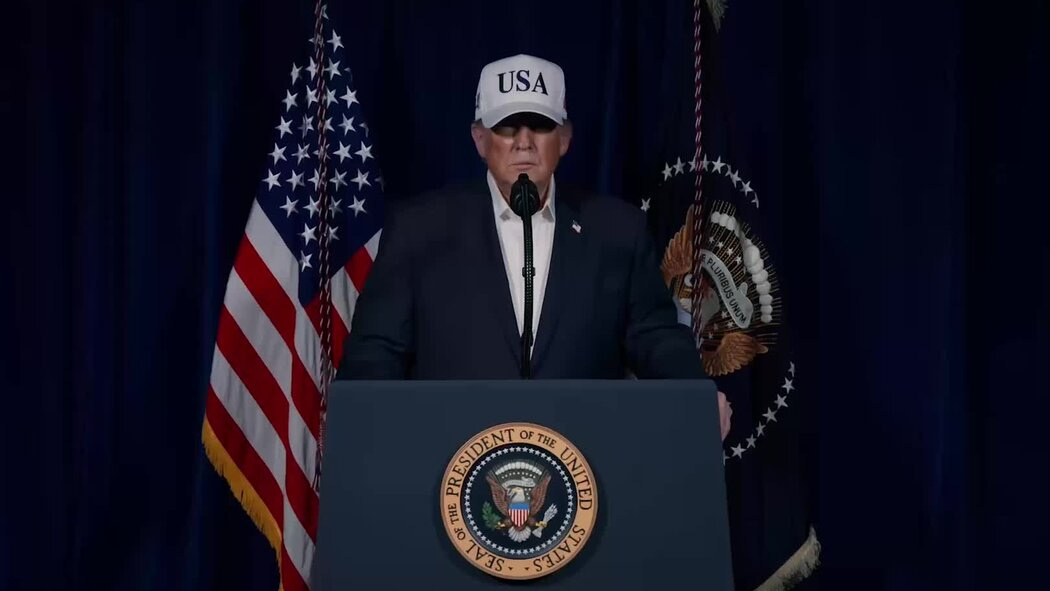
There was no vote. No debate. No authorization from the body constitutionally charged with declaring war.
The strikes launched on February 28th — Operation Epic Fury, in case the branding wasn’t sufficiently cinematic — targeted the Iranian supreme leader’s compound, nuclear facilities, IRGC military bases, and what the Pentagon described as “command and control infrastructure” across multiple cities. Supreme Leader Ali Khamenei is dead. So are hundreds of others, including what Iranian officials say were schoolchildren in the southern city of Minab — a claim supported by circulating footage but not yet independently verified.
The Strait of Hormuz has effectively shut down. Tanker traffic is down sharply, several vessels have been damaged, and oil surged nearly 9% in a single day. Iranian missiles have struck targets across the Gulf. Airports have closed. Six American service members are dead in Kuwait. Three U.S. fighter jets were reportedly shot down in a friendly fire incident involving Kuwaiti defenses.
And a handful of congressional leaders got phone calls the night before.
The rest of Congress — and the rest of the country — found out after the bombs fell.
I’m not going to write the essay you expect.
I’m not going to argue whether the strikes were justified. I’m not going to litigate the intelligence, debate the morality of regime change, or parse whether Khamenei’s death makes the region safer or more dangerous. Those arguments matter, but others will make them.
What I want to name is something quieter and more corrosive.
The Justification That Isn’t One
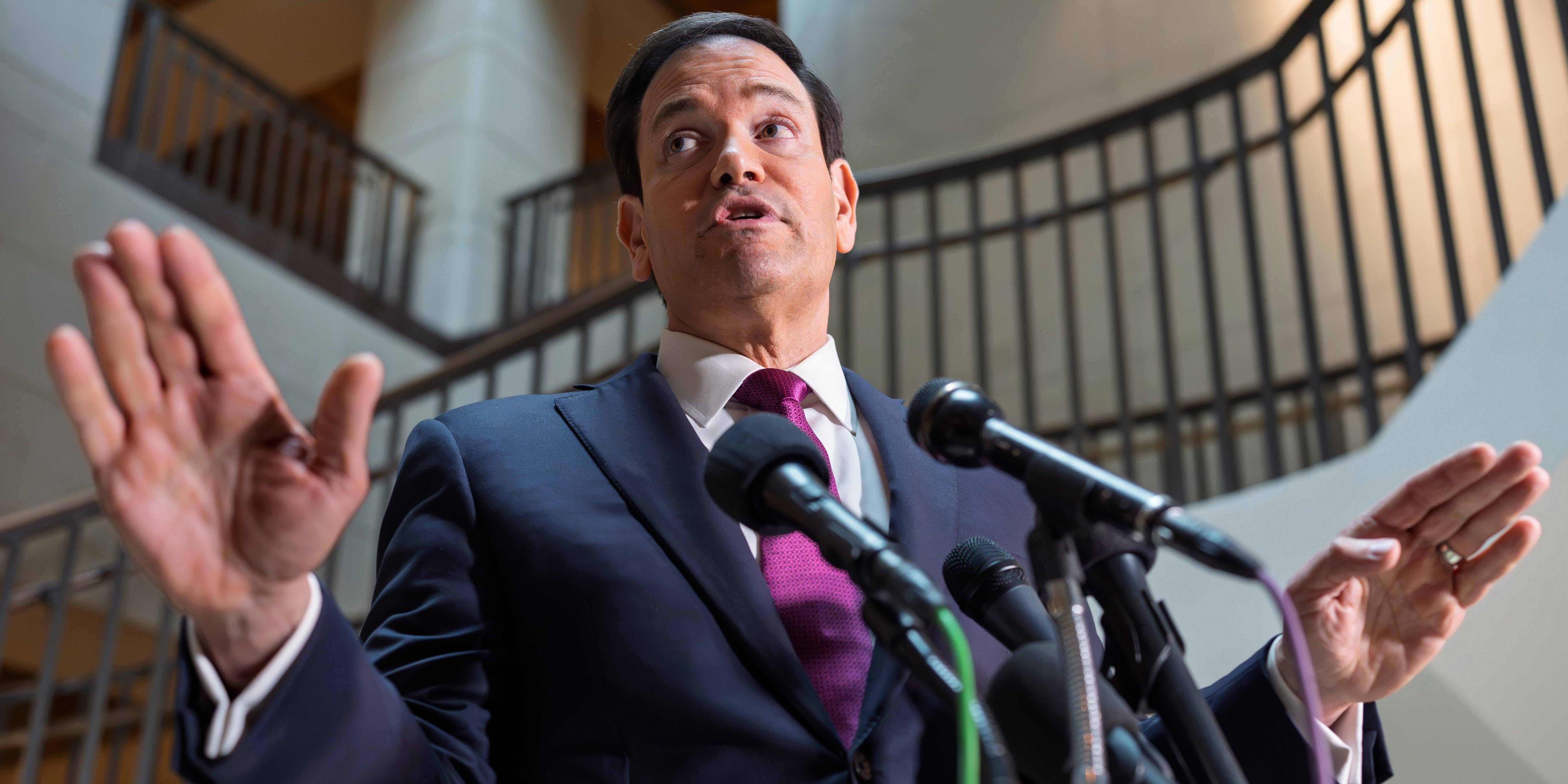
Secretary of State Marco Rubio stood before cameras and said there “absolutely was an imminent threat.” The administration’s argument was that the United States acted preemptively because Israel was preparing to strike Iran, and if Israel struck Iran, Iran might retaliate against American forces.
Follow the logic carefully.
We attacked Iran because we believed someone else might attack Iran, which might provoke Iran to attack us.
This is not a justification.
It is a sequence of assumptions presented as inevitability.
Congressional staff briefed after the strikes reportedly said there was no intelligence indicating Iran was preparing a direct attack on U.S. forces. The administration’s own timeline — a ten-day ultimatum issued on February 20th, followed by military action when negotiations in Geneva produced no satisfactory result on February 28th — suggests not an imminent threat, but impatience.
But here is the part that should concern you more than the strike itself.
It doesn’t matter.
Whether the justification holds is almost beside the point, because the institutional architecture designed to evaluate it before missiles launched has effectively disappeared.
The War Powers Resolution still exists. Congressional authorization still exists. The constitutional separation of powers still exists.
On paper.
But last Friday demonstrated something important: those constraints were not overridden.
They were ignored.
Not because they were repealed, but because nothing happens when they are.
That is what institutional permission collapse looks like.
Not dramatic constitutional crises.
Just rules that no longer impose consequences.
The Precedent Chain
Permission structures rarely collapse all at once. They erode through precedent.
Each time an executive acts without authorization and nothing happens — no legal challenge, no meaningful congressional response, no political consequence — the boundary moves.
Not in law.
In practice.
George W. Bush expanded the war on terror into a global authorization framework. Barack Obama used that framework to conduct an air campaign in Libya without congressional approval. Donald Trump ordered the strike that killed Iranian General Qassem Soleimani in 2020 without new authorization.
Each decision stretched the effective limits of executive war-making.
Each time, the system absorbed the precedent.
But there is a meaningful difference between targeted military strikes and the opening phase of a regime-change war against a sovereign state — striking its capital, killing its head of state, and initiating a conflict that immediately ripples across global energy markets and regional security architecture.
The distance between those two things is not trivial.
It is the difference between testing a boundary and discovering there is no boundary left.
And once the system demonstrates that an individual can initiate military conflict of this scale without prior authorization, the specific target almost ceases to matter.
The mechanism is the story.
The Cascade You’re About to Feel
The first consequences are already visible.
The Strait of Hormuz — through which roughly one-fifth of the world’s oil supply moves — is effectively disrupted. Energy markets responded immediately. Analysts are now modeling oil prices well above $100 per barrel if the closure persists.
Those price increases will not stay confined to energy markets.
They will move through transportation costs, food prices, and inflation data with mechanical predictability. Within weeks, they will show up at gas stations. Within months, they will appear in economic indicators that shape fiscal policy and interest rates.
Meanwhile, missile exchanges across the Gulf have forced airport closures and disrupted energy infrastructure in a region Americans increasingly treat as a stable financial hub. The UAE, Qatar, and Bahrain are now intercepting drones and ballistic missiles while attempting to keep critical export infrastructure online.
None of these consequences required public consent.
None required congressional authorization.
A decision made by a single node in the system triggered a cascade across energy, financial, and geopolitical risk structures affecting hundreds of millions of people.
That is not how constitutional governance was supposed to function.
A system in which one actor can trigger global consequences of this magnitude without institutional review is not one operating under meaningful constraints.
It is a system operating without a governor.
What the Machine Showed You
I write about institutions because I believe — perhaps stubbornly — that understanding how systems actually function matters.
People make decisions based on how they think the machine works.
But every so often, the machine reveals itself plainly.
This week was one of those moments.
A war began without congressional authorization. The justification was delivered afterward. The consequences are now propagating through global markets and regional security structures, whether the public agrees with the decision or not.
The debate over whether this particular strike was wise will continue for months.
But the deeper question is simpler.
If the institutional architecture that once constrained these decisions no longer operates in practice, then the most consequential risk Americans face is not a specific war abroad.
It is the realization that the system making those decisions no longer functions the way it was taught to believe.
The pattern that produced this week did not begin last Friday.
And there is no reason to believe it ends here.
I’m just trying to figure out how we survive this without violence. For example, if we enter another strong recession or an economic depression. What happens when people have nothing left? When the system turns on them. We already blame the poor for being poor. Hasn’t any one in charge actually read “The Grapes of Wrath “?
The slippery slope of institutional erosion has turned into an avalanche. Checks and balances aren't checking or balancing, equal branches of government are anything but, and zero accountability .... what could go wrong? Fear not ... Kushner is on it. Just waiting for his guest appearance on South Park.
Our regime leaders all think they are Dirty Harry - "Rules? laws? Get outta my way, punk." "Murica, indeed.