

The Strait of Hormuz Just Gave Your Savings a Deadline
You're Not Energy Independent. Your Savings Are Proof.

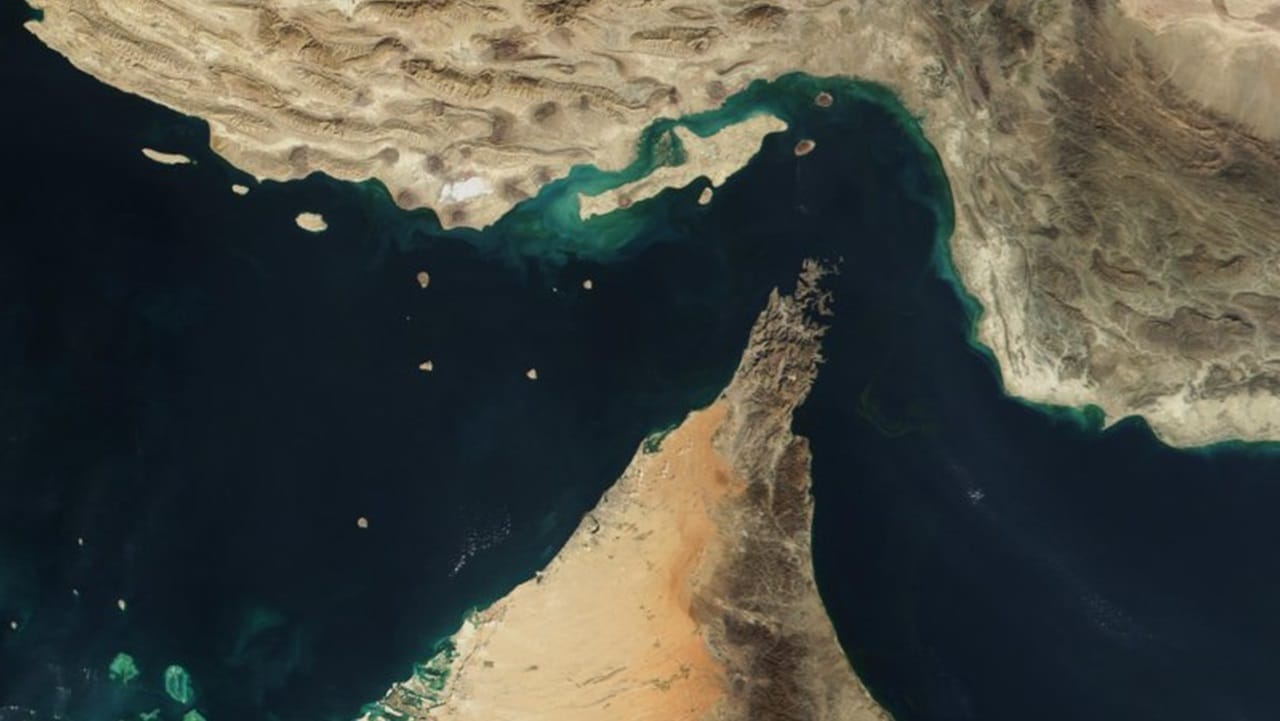
The IRGC declared the Strait of Hormuz closed on March 2nd.
The insurance companies had already agreed.
Pay attention to that sequence, because it tells you more about how the world actually works than anything you will hear from a cable anchor in the next seventy-two hours. Generals posture. Admirals bluster. Diplomats issue carefully worded statements of deep concern. What closes a strait in practice is when marine war-risk underwriters — Gard, Skuld, NorthStandard, the London P&I Club — quietly decide they are no longer willing to insure vessels passing through it.
War-risk premiums spike. Coverage gets suspended. And suddenly, no tanker captain on Earth is willing to move two million barrels of crude through a three-mile corridor where the financial liability is now infinite.
When the underwriters exit, the ships stop.
Not because Tehran issued an order that the world community found legally binding.
Because the math stopped working.
This is the unromantic truth about chokepoints: they are not closed by navies.
They are closed by accountants.
The Strait of Hormuz is twenty-one miles wide at its narrowest point. The actual shipping lane — the navigable corridor through which tankers pass in both directions — is about three miles across.
Through those three miles passed, until very recently, roughly 20 million barrels of oil per day.
One-fifth of global consumption.
One-third of all seaborne crude.
About twenty percent of the world’s liquefied natural gas.
The entire energy metabolism of the industrial world squeezed through a gap you could drive across in fifteen minutes.
As of this week: almost nothing.
Oil jumped 13 percent in the first twenty-four hours.
Very Large Crude Carriers — the supertankers that move two million barrels at a time from the Gulf to Asia — briefly hit freight rates above $420,000 per day, nearly double the prior week’s level. Several tankers have already been struck. More than a hundred vessels now sit idling in open water, engines running, crews waiting for the market or the missiles to decide which way this story goes.
Iraq has begun slowing operations at the Rumaila oil field because storage capacity is filling and exports have nowhere to go.
Somewhere in this country, a television commentator is explaining to a studio audience that America is energy independent.
He is not lying.
He is doing something more dangerous: repeating a technically accurate statement stripped of the context required to understand what it actually means.
The Comfortable Lie
The United States does not import large volumes of crude oil from the Persian Gulf.
That statement is true.
The shale revolution made it so. American production surged, imports fell, and by the official accounting used in Washington, the United States achieved “energy independence.”
But oil is not a local commodity.
It is a global commodity priced on a global market by traders who do not care whether a particular barrel originated in West Texas or Saudi Arabia.
When tankers start burning in the Gulf of Oman, the benchmark price of oil rises everywhere.
Including Cincinnati.
Including Phoenix.
Including every American city where politicians once promised that shale production would insulate consumers from exactly this kind of disruption.
Energy independence means the United States produces enough oil to meet its domestic needs.
It does not mean the United States is insulated from global price shocks.
Those are different claims.
The political class spent fifteen years quietly blurring that distinction because the accurate version is less satisfying at a campaign rally.
The people who believed the simplified version are now about to discover the difference.
Comfortable lies are free when you consume them.
The invoice arrives later.
But the price at the pump is the small problem.
It is the visible problem.
The larger problem is structural and moves more slowly.
What Actually Happened
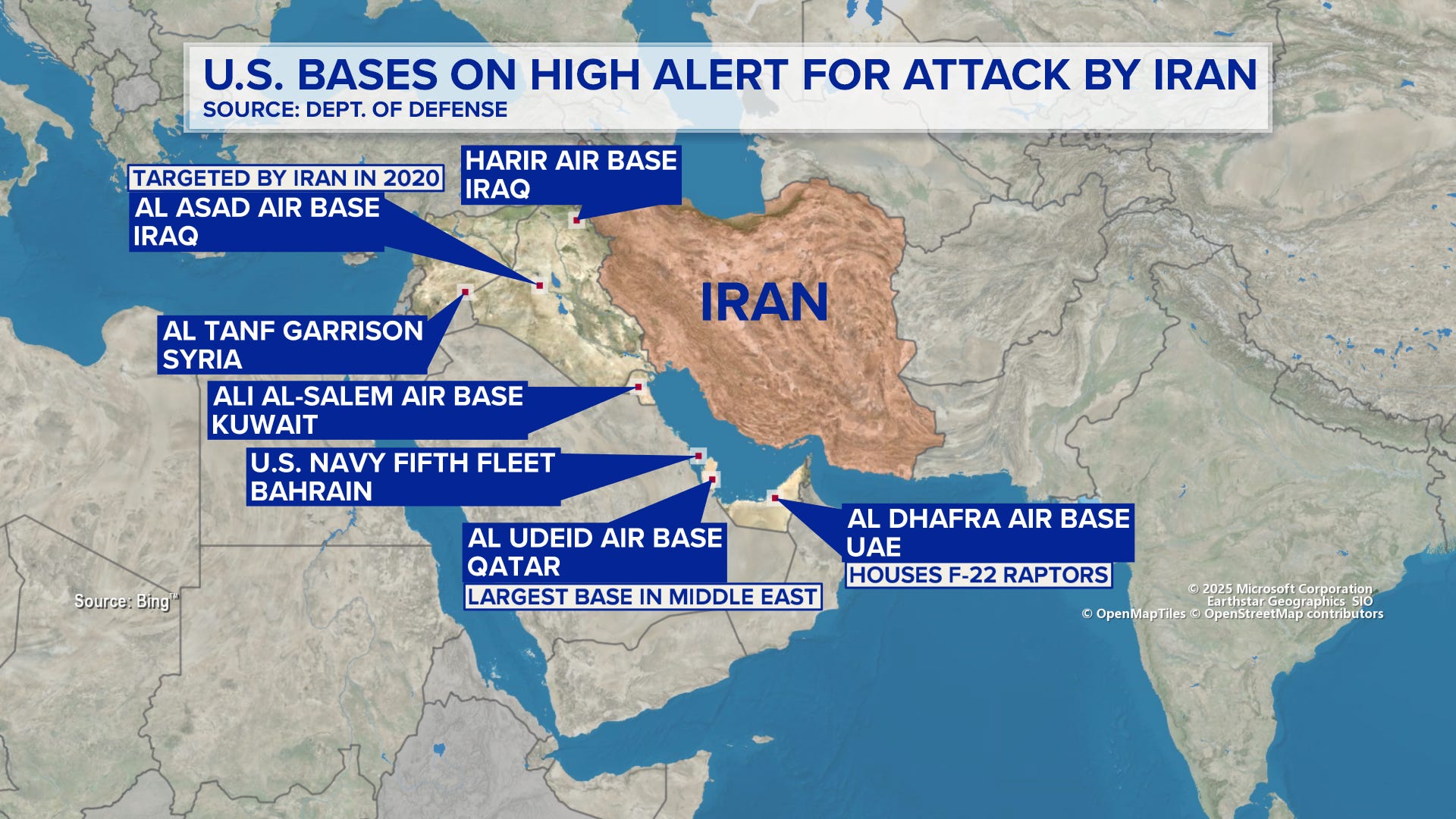
On February 28th, the United States and Israel launched coordinated strikes on Iranian targets.
The attacks killed Iran’s Supreme Leader, Ali Khamenei, along with senior figures in the Iranian security establishment. Nuclear facilities, military installations, and command infrastructure were also hit across multiple locations.
The operation was called Epic Fury, a name that sounds less like a strategic doctrine and more like something a junior Pentagon staffer came up with after watching too many action movies.
Iran’s response has been markedly different from the symbolic retaliation seen in prior confrontations.
Ballistic missiles have struck Israeli targets.
Drone attacks hit Gulf states hosting American military bases.
Warheads had been pre-positioned near regional borders before the strikes even occurred — which suggests Iranian planners anticipated the escalation and prepared for it.
Market intelligence firm Kpler described the shift in unusually blunt terms:
Iran has moved from “coercive signaling” to “existential defense.”
That distinction matters.
Coercive signaling is what a state does when it wants to influence an opponent’s behavior.
Existential defense is what a state does when it believes the contest is about survival.
Countries operating in that mindset do not optimize for economic outcomes. They do not worry about alienating trading partners. They worry about whether they will exist next month.
And they behave accordingly.
Meanwhile, the Houthis in Yemen — watching the region slide toward open confrontation — have resumed attacks on commercial shipping in the Red Sea.
Which means two of the most important maritime chokepoints on the planet are now simultaneously degraded.
Ships can reroute around Africa via the Cape of Good Hope, but doing so adds weeks to transit times and enormous cost to every voyage.
Maersk has suspended transits.
Hapag-Lloyd has suspended transits.
The logistics industry calls this “prioritizing safety.”
What it really means is that nobody involved in global shipping has any idea when the situation stabilizes — and no one intends to be the one holding the liability if it doesn’t.
The last time global shipping suffered disruptions of this magnitude was during the COVID pandemic.
But COVID began as a demand shock.
This is a supply shock from the beginning — deliberate, geopolitical, and with no visible timeline for resolution.
The Paywall Break
Here is the key question:
How does what happens in a three-mile shipping lane translate into the purchasing power of the money sitting in your bank account?
That transmission mechanism is where the real story begins.
