


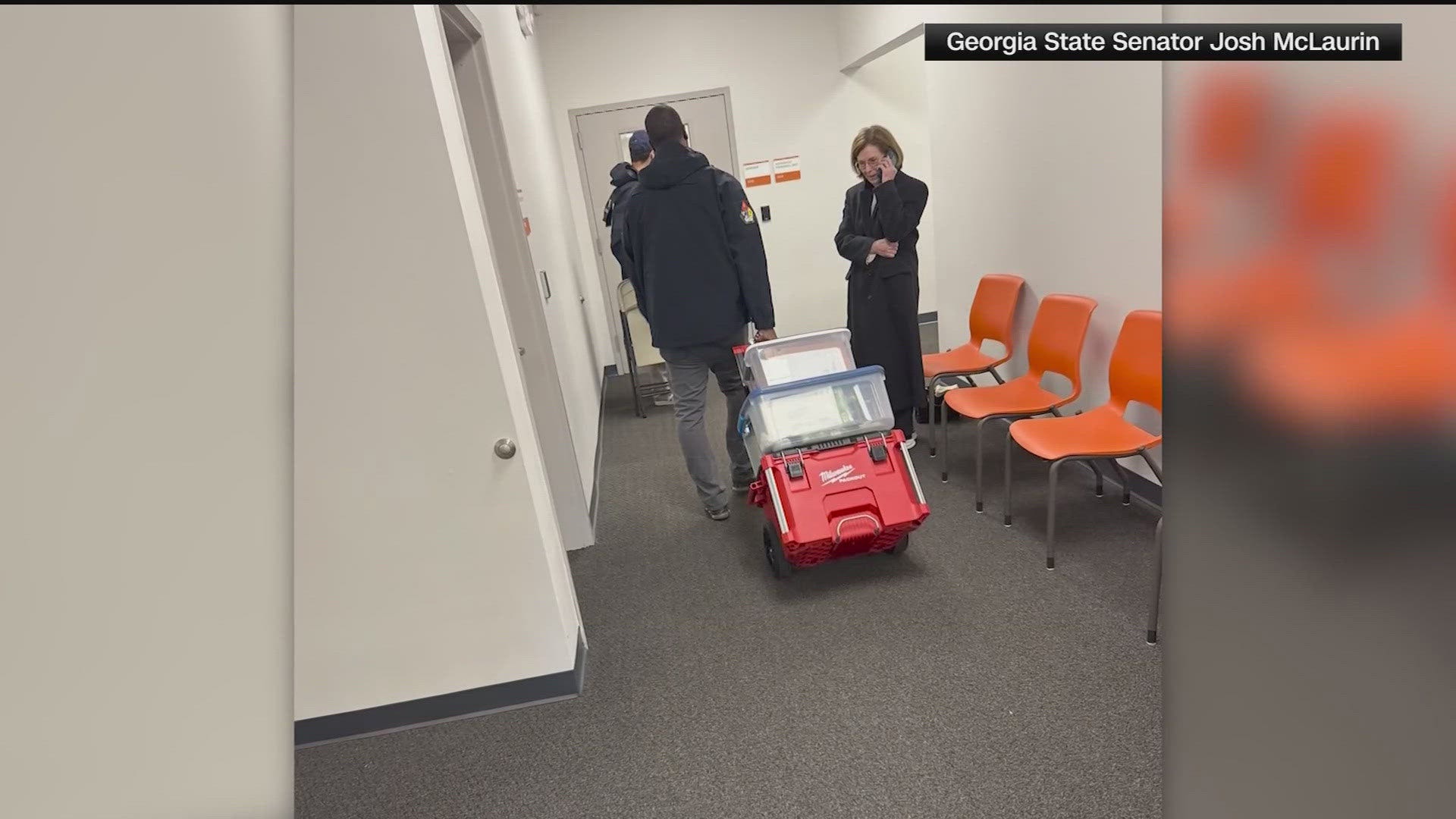
I’ve read the warrant carefully. (You can read it here as well.)Without access to the supporting affidavit, it is—quite literally—analytically meaningless.
A search warrant is not the signature page. It is the affidavit plus the magistrate’s authorization. Without the factual predicate presented to the court, all that exists here is a claim that “probable cause” was found, without any visibility into why.
What we can evaluate, however, is whether the warrant, as issued, coherently maps onto the statutes it cites.
I don’t think it does.
I’m quite confused (still).
What the Government Appears to Be Alleging
The warrant relies on 52 U.S.C. § 20701 and 52 U.S.C. § 20511.
At a basic level:
§ 20701 imposes a duty on election officials to retain federal election records for 22 months.
§ 20511 provides criminal penalties for knowing and willful violations of election-related provisions in Title 52.
That is the entire statutory framework invoked.
There is no allegation of espionage. No allegation of foreign influence. No allegation of counterintelligence concerns. Thus, why Tulsi Gabbard was there remains a mystery.
Nothing in the warrant suggests why any intelligence or national-security personnel would be involved, because nothing in these statutes implicates them.
This is, on its face, a records-retention theory that appears to be the case. The crimes are procedural crimes. This whole thing makes little sense in the “risk-reward” calculus of using the FBI to seize records from a County office.
The Timing Problem (Which Is Fatal Unless Explained)
The 2020 federal election occurred on November 3, 2020.
The statutory duty to retain records under § 20701 therefore expired in September 2022.
That is not debatable. It is arithmetic.
This warrant issued in January 2026—more than three years after the retention obligation lapsed.
For § 20701 to support probable cause now, DOJ has to be asserting all of the following:
That election records were unlawfully destroyed during the retention period;
That evidence of that destruction still exists in 2026; and
That the appropriate remedy for past destruction is the seizure of remaining original records years later.
That theory is doctrinally weak. Section 20701 is a preservation statute. It does not authorize retroactive evidentiary excavation long after the statutory duty has expired. And again, so what? There’s no remedy that can “undo” any of the harms that Justice might allege, and the “criminals” in this case are best facing a thousand-dollar fine and maybe a year in prison. This is hardly worthy of a massive federal “HANDS UP” guys run in with machine guns and take out boxes of information.
If records were destroyed, seizing what remains does not prove that a crime was committed. If records were preserved, there is no crime. If the records aren’t preserved, you’d have to show when they were destroyed, and you’d have to show they were destroyed BEFORE September 2022.
The statute simply does not support the remedy.
It makes little sense.
The Criminalization Problem Under § 20511
Section 20511 criminalizes knowing and willful election fraud or misconduct.
That normally requires:
A person,
A scheme,
Intent,
And specific acts.
This warrant names none of those. So, on that basis alone, I’m confused why the writ was issued.
Why? Because the writ authorizes the seizure of:
All ballots,
All tabulator tapes,
All ballot images,
All voter rolls.
That is not evidence-gathering in support of a defined criminal theory. It is a reverse fishing expedition: seize everything first, decide later what the theory might be. That’s not how warrants are typically issued.
Courts tolerate breadth only when it is anchored to particularized probable cause. Here, breadth appears to substitute for theory.
So again, I’m confused.
The Subpoena Question (Which the Warrant Cannot Answer)
The biggest red flag to me is this: these records could have been obtained by subpoena.
That matters.
A subpoena would have produced copies, preserved state custody, allowed pre-compliance judicial challenge, and maintained institutional comity.
A search warrant does the opposite:
It seizes originals,
Transfers exclusive federal custody,
Eliminates adversarial review beforehand,
And forecloses independent verification.
The choice of a warrant over a subpoena signals that control of the evidentiary substrate, not mere access to information, was the objective.
That raises a serious question: why was exclusivity necessary?
My answer to that question remains that the Trump Junta wished to preclude anyone else from demonstrating the election was “not rigged” in Fulton County; the conclusion every prior investigation has reached (independently).
Prior Investigations Cannot Be Ignored
Before this warrant issued:
The State of Georgia investigated the election;
Fulton County conducted its own reviews;
DOJ, under Attorney General Barr, examined allegations and closed them.
None of those investigations resulted in findings of ballot destruction or criminal fraud sufficient to support charges. In short, no evidence of Trump, Giuliani, or the other conspirators alleging voter fraud was found. Quite the opposite. Court after court concluded that there was no fraud, that the conspirators had engaged in it themselves. Guilani, in particular, was found liable for defamation of poll workers.
All of the judicial and collateral estoppel claims point to the conclusion that no crime has been committed
Those facts were known. If they were not in the warrant request, then that is likely a material omission. That said, even not being in the request, one would have hoped the Magistrate Judge would have had some cognitive understanding of the history of events in her own state and county.
I guess not.
While legally she doesn’t have to remember facts, history, being educated beyond the level of a turnip, it would have seriously helped here had she been at least a bit inquisitive about “why now” and “why is this the only remedy.”
She wasn’t.
That’s not misconduct or unlawful; it’s unfortunate. The real damage done here was to federalism.
The Federalism Problem
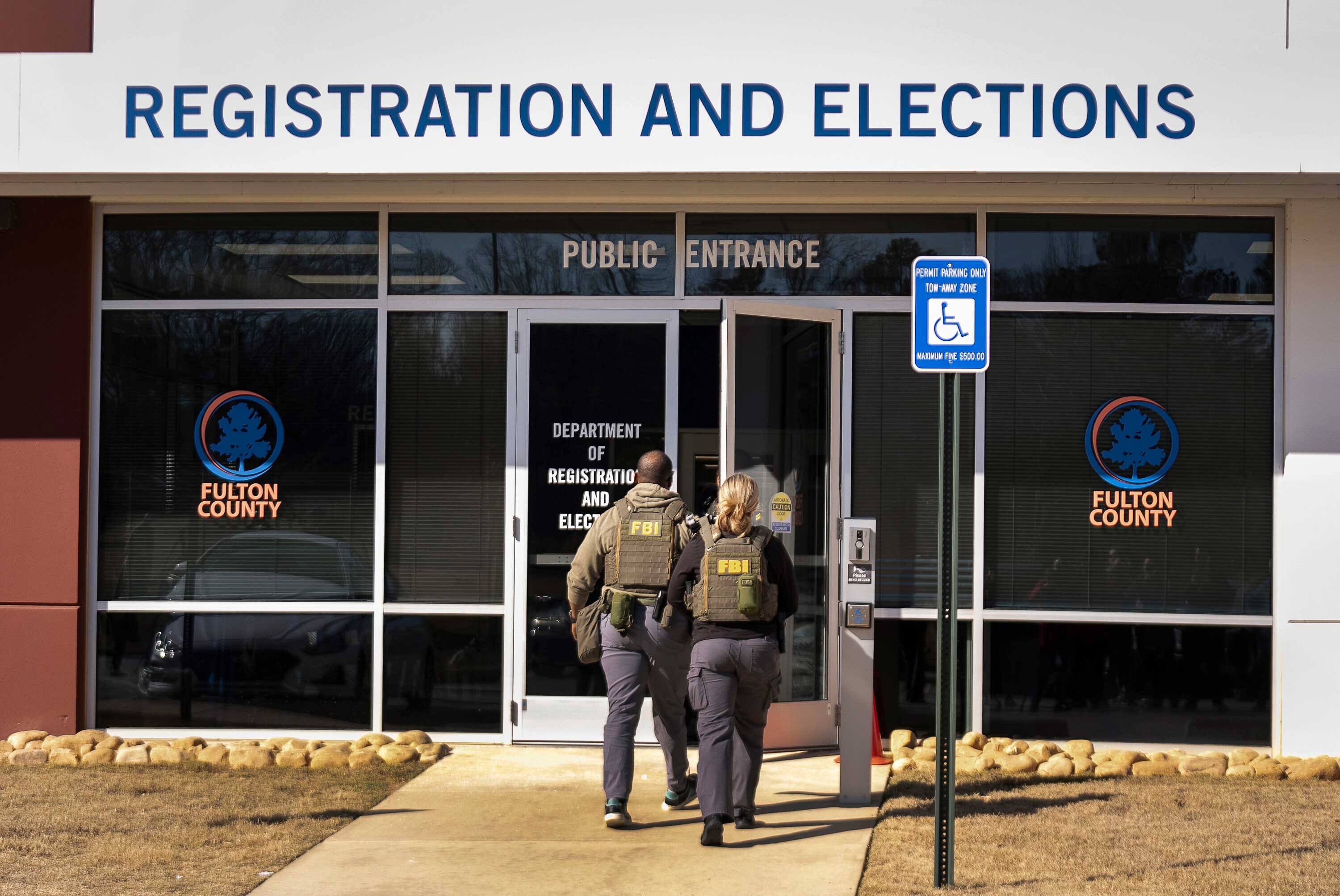
This was not a warrant served on a private business or criminal enterprise.
It was served on a county election authority, exercising state-delegated constitutional functions.
Federal courts are traditionally cautious here. Criminal search warrants against sovereign election infrastructure are extraordinary remedies. That heightens—not lowers—the obligation for precise statutory fit and clear necessity.
Nothing in the warrant demonstrates that level of justification.
The Overlooked Consequence: Interference with State Criminal Prosecutions
There is an additional problem that the warrant does not address at all.
By seizing original election records from Fulton County, the federal government likely impairs the County’s ability to prosecute state crimes—a consequence that is neither incidental nor speculative.
Fulton County does not merely administer elections. It prosecutes crimes. Ballots, voter rolls, tabulator tapes, and related materials are not historical artifacts; they are potential criminal evidence in state election-law prosecutions, forgery cases, false-swearing investigations, and chain-of-custody disputes. Removing those originals from county custody transfers exclusive control of that evidence to the federal government.
That transfer creates immediate legal friction.
First, the chain of custody becomes vulnerable. Once evidence leaves state control, any future prosecution must account for an inter-sovereign custody break—an issue defense counsel will exploit aggressively, regardless of the FBI’s internal handling procedures.
Second, the seizure complicates the County’s discovery and disclosure obligations. Under Brady and its progeny, prosecutors must disclose exculpatory evidence within their possession or control. When original evidence is held by a separate sovereign, questions arise about access, delay, and completeness—questions that courts do not treat lightly.
Third, timing matters. State criminal prosecutions are subject to speedy-trial requirements, discovery deadlines, and statutes of limitation. Federal custody can delay forensic testing, expert review, and court-ordered inspection. If a case fails because evidence was unavailable when required, the harm cannot be undone.
These risks are precisely why subpoenas, not search warrants, are the standard mechanism when federal investigators seek records held by state or local authorities. Subpoenas preserve custody, allow copying, permit pre-compliance judicial review, and avoid disabling parallel prosecutions. A warrant does the opposite.
When the federal government chooses seizure over a subpoena, courts normally expect a compelling explanation for why exclusive custody is necessary.
This warrant provides none.
The result is a remedy that not only strains statutory authority, but also interferes with the ordinary functioning of a co-equal sovereign’s criminal justice system—a consequence that should have factored heavily into any probable-cause determination.
Its absence from the warrant is conspicuous.
Why a Franks Hearing Is the Only Place This Makes Sense
At this point, the only way this warrant becomes intelligible is through the affidavit.
A Franks hearing would test whether material facts were omitted or misrepresented in securing probable cause, particularly facts about:
The expiration of the statutory retention duty;
The absence of prior findings of destruction or fraud;
The availability of subpoenas;
And the extensive prior investigations already conducted.
If those facts were withheld, the magistrate may have been presented with a distorted picture of criminal necessity.
That is precisely what Franks v. Delaware is designed to address.
Bottom Line
As written, this warrant does not explain itself.
The statutes cited do not justify the timing, scope, or remedy. The criminal theory is undefined. The seizure is maximal. The federalism implications are severe. And the choice of a warrant over a subpoena is unexplained.
Until the affidavit is exposed, the only reasonable conclusion is that the warrant raises far more constitutional and doctrinal questions than it answers.
And that alone warrants serious scrutiny.
Absent a Franks hearing, we’re left to conclude things that are nefarious:
That the purpose of the warrant was seizure, not discovery, to preclude any meaningful political commentary.
That it was designed to obstruct the prosecution of the remaining conspirators in the Fulton County Case.
That it was designed to obstruct the prosecution of the President in that case.
That it was designed to preclude any meaningful analysis of the vote in that county by outside research or parties
That it will be leveraged as a piece of evidence to justify unlawful intrusion by the federal government into state and county election processes.
Absent the Franks hearing, we must conclude that all of those goals, and not a lawful inquiry into a crime, were the DOJ’s objectives. That conclusion aligns with why one would go and issue this type of warrant.
What remains is why the Magistrate thought it was reasonable to let the warrant issue.
Joyce White Vance had a good piece on it last night as well. Especially regarding why a US Attorney from St Louis was involved.
https://open.substack.com/pub/joycevance/p/today-fulton-county-tomorrow?utm_source=share&utm_medium=android&r=1wbr1r
we are living in an oxymoronic constitutional dictatorship