

The Only Test That Matters
My thoughts on Substack/Pangram and justifying my existence to robots.

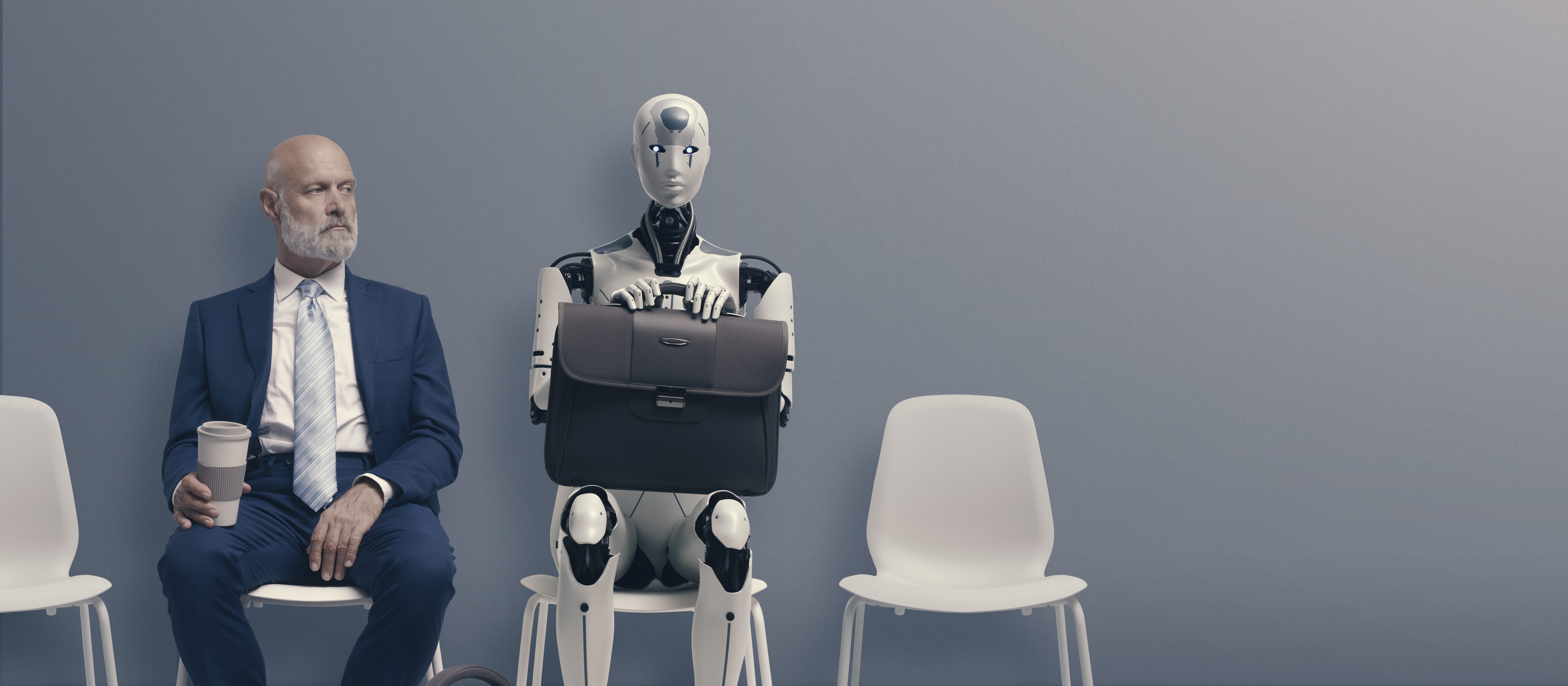
As you know, Substack has partnered with a company called Pangram to flag and label writing it believes was produced by artificial intelligence.
I wrote about this before it arrived. Funny thing about that piece. It’s been read by a lot of people (close to a million). It’s been shared, argued over, and it’s still collecting comments. More than once, someone has sent it to me — you should read this.
Yeah. I know. I wrote it.
Let me remind you of something. That article, that people shared, loved, commented, hated, shared, and so forth? When I started here, I didn’t tell you who I was. I gave you almost nothing to go on. I wrote under a different name entirely, and the work had to survive on its own. No personality to trade on. No audience marched over from some collapsing masthead. No journalist’s grievance story about telling his editors where to go. Just words on a screen, and whether they were worth your time.
Four of those pieces have been read more than half a million times each. It wasn’t luck. My top 20 articles each have over a quarter of a million views. Each.
Nor should it surprise anyone. I have been trading words and ideas for money for thirty years. I built this the only way I know how — by putting an idea in front of you and letting you decide what it was worth.
And now a software company is going to sit in judgment on how I make it.
The defense is always the same. It’s here to stop the slop.
Fine.
Here’s a thought: if the piece is worthless, don’t read it.
I confess I’m endlessly amused by the reader who makes it through all seven thousand words and then complains. I’m sorry — are you looking for a refund? Nobody held a gun to your head and demanded you suffer through it. You could have stopped at any sentence and gone on with your life.
Agency can do a lot for the soul.
But apparently, according to the machine, no writer may organize his thoughts in logical order. No writer may use correct punctuation. No writer may actually command the language he’s writing in.
Do all three, and you must be a robot.
Here is what these detectors are actually measuring, as far as I can tell. Left alone, an AI writes to the strict rules of the language — clean structure, orderly punctuation, disciplined sentences. What the detector flags is precisely that discipline. It is not asking whether a mind made this. It is asking whether the prose is messy enough to look unsupervised. The tool rewards sloppy writing and punishes careful writing, and calls the gap between them “human.”
That is not a measurement of authorship. It is a measurement of how much noise is in the signal.
And understand what the mark is built on. The premise is that anything AI touched is unworthy by definition — because a machine was somewhere in the room.
A machine has no thoughts.
It has no lived context.
It is not alive.
So the slop is slop for one reason: it is bad thinking, flawlessly executed. The polish was never the problem. The thinking was. And no detector on earth can tell you whether the thinking is any good. That was always your job. It is still mine.
(The em dash, I’m told, now belongs to the robots. The purists can pry it out of my hands.)
Let me tell you plainly how I work. I use AI every day, for hours — Claude, ChatGPT, Perplexity. I use them to make models, develop advertising and websites, create explanatory graphics. I use them as my staff. I use it to build things that are genuinely useful. The Fuckupometer was made with Claude Code. I hope you enjoyed it. A lot of you did.
Do I use it to write?
I use it the way every serious publication uses an editor. It stress-tests the argument. It sharpens the sentence. It tells me where the logic is thin. And when it puts a line on the page, I do to that line exactly what I do to everything that carries my name — I edit it. Ask the guest writers who’ve appeared here. I revise their work too. Hopefully to make it better.
A dirty secret from a life spent writing for publication: I am about as good as it gets, and my work gets edited. Full stop.
I stopped taking it personally a long time ago.
Editors have discretion. Editors change your work. The only difference between a good writer, a bad writer, and a published writer is how much revision the first two will accept before the thing goes out the door.
That is how I use AI most. As editor. As stress test. As the steel that sharpens the blade. The ideas are mine. The judgment is mine. The decision about whether a sentence has earned its place is mine, and I make it, every time, on every piece.
If that troubles you — stop reading. There is no gun to your head.
Pangram will start pinning its scarlet letter to my work. Fine. They can do as they like. But I’d ask you to hold their machine to the same standard you’d hold anyone who claims to detect the truth to.
When I was in the intelligence community, I sat for a fair number of polygraphs. I’ll be honest with you — I never once knew what was actually being measured. I’ve taken the IQ tests too. Allegedly, I’m a genius. My family stands ready to supply counterevidence.
There has only ever been one test that mattered here. Do you find the work useful?
If you do — read it, share it, and I’d be grateful for your subscription.
If you don’t — stop. Same as it’s always been. No gun to your head.
I’ve decided to ignore Pangram.
And on the day a scanner’s verdict starts coming between you and the work, I’ll take the work somewhere the only test that applies is the one that was ever real. Yours.
For now, that’s where I stand.
The rest is up to you.
P.S.: I asked the Oracle of Substack/Pangram to rate my article before I posted.
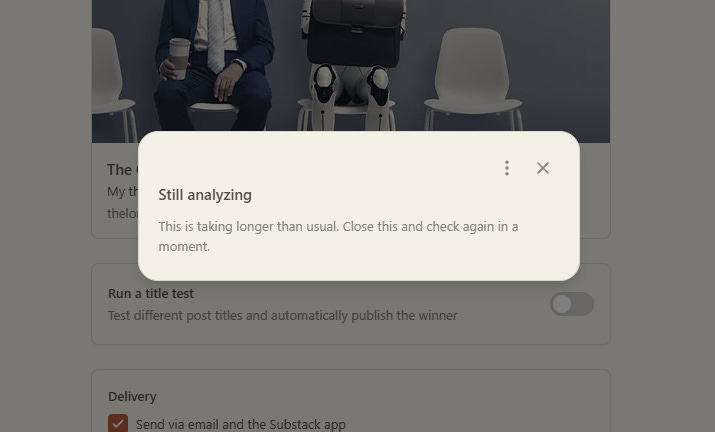
Jury’s still out, I guess. I feel metaphysically in limbo. Am I me? Am I real?
WHO AM I!?
I guess I’ll have to wait for Substack’s version of “Degree Absolute!”
Now hear the word of the Lord.
You Prisoner fans will hopefully get it.
Be seein’ you.
As a subscriber to The Long Memo since the beginning, I'll continue to read everything you write on whatever platform you write on. The enshittification of Substack continues.
I'm with you on em dashes - I use them all the time and have for years, both in my personal and professional writing. They mimic the way I speak, so they feel authentically me.