

The 22nd Amendment Is Now an Open Question.
The institutional consensus that made the 22nd Amendment binding has been quietly retired, on the record, in confirmation testimony, over the past eighteen months

The Twenty-Second Amendment is forty-five words. Section one reads, in its entirety: No person shall be elected to the office of the President more than twice, and no person who has held the office of President, or acted as President, for more than two years of a term to which some other person was elected President shall be elected to the office of the President more than once. The amendment was proposed by Congress in March 1947 and ratified in February 1951.
The political context of its ratification matters. Franklin Roosevelt had been elected four times. The norm Washington established in 1796 by declining a third term had held without textual backing for nearly a century and a half, binding because the political class treated it as binding, not because any document required them to. Roosevelt’s four elections demonstrated that an unwritten norm can yield to a sufficiently determined officeholder under sufficient national pressure. The amendment was the institutional response: the conversion of the norm into text intended to settle the question permanently.
For seventy-five years, it has functioned that way. No president has run for a third term. No serious candidate has tested the question. Eisenhower considered in private correspondence whether the amendment applied to him, given the timing of its ratification relative to his elections, and concluded that it did. Reagan’s allies floated repeal in 1986 and 1987; the floats generated no internal traction and were dropped. The political class of every administration since 1951 has treated the two-term limit as a binding constitutional rule rather than a contestable question.
The reason for that treatment has not been the text. Forty-five words cannot enforce themselves. The reason has been the institutional consensus that the text was binding — a consensus expressed through party rules, through judicial restraint, through state ballot-access procedures, through the Senate’s deference to constitutional structure, and through the political culture’s shared assumption that the question was closed.
The amendment’s strength was never its text. Its strength was the institutional consensus that the text was binding.
What the Amendment Is Not
A constitutional amendment is not a self-enforcing law. There are very few self-enforcing laws in any legal system and almost none in a constitutional system organized around separated powers. Self-enforcement requires a mechanism that activates automatically when the law is violated. The Twenty-Second Amendment has no such mechanism. Its enforcement depends on institutional actors — courts, election officials, congressional certifiers, the Electoral College, state attorneys general — choosing to enforce it when the question arises.
This is not a peculiarity of the Twenty-Second Amendment. It is a structural feature of the Constitution as a whole. The Emoluments Clause requires institutional enforcement; in the absence of that enforcement, its operational status has been a recurring subject of litigation and political contest. The Recommendations Clause operates through different institutional channels in different administrations. The Appointments Clause depends on Senate enforcement whose vigor has varied substantially across the past several decades. The Constitution is a network of provisions that function through institutional consensus. When consensus erodes around a provision, the provision becomes more contestable — not necessarily inoperative, but more contestable than it was.
The Twenty-Second Amendment has not been enforced because it has not needed to be. No president since 1951 has attempted to evade it. Its enforcement infrastructure has therefore never been activated in a live case. The question of how it would actually be enforced if a sitting president sought a third term has remained largely academic. Academic questions become live ones when conditions change.
The conditions that have kept the question academic have shifted across several dimensions over the past eighteen months. The shifts are observable. They do not, individually or collectively, prove that a third-term challenge is being prepared or is imminent. They do indicate that the constitutional space around the amendment is more contestable than it was three years ago — more contestable in ways that responsible institutional actors should not dismiss.
The Confirmation Pattern
The most visible institutional venue in which the shift has registered is the federal judicial confirmation process. The pattern that has emerged in confirmation testimony since early 2025 deserves careful description rather than confident characterization.
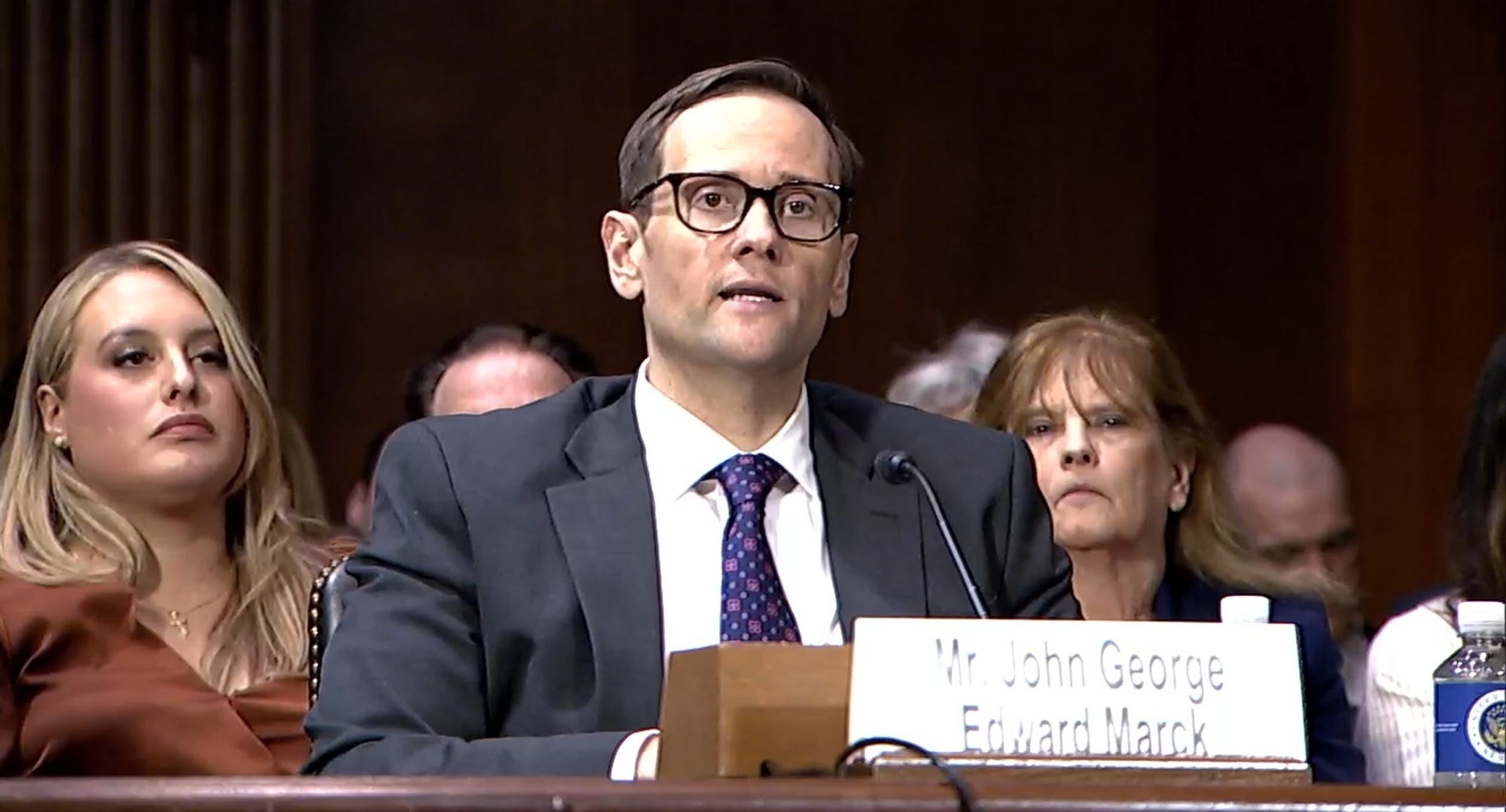
Nominees to the federal circuit courts, and to a lesser degree to the Supreme Court, have been asked — sometimes directly, sometimes through written questions for the record — whether they consider the Twenty-Second Amendment self-evidently enforceable, whether they would consider the question of its application to be open for adjudication, and whether they would be prepared to rule on its enforcement absent congressional implementing legislation. The answers have varied. The substance of the answers, in aggregate, has trended in a consistent direction.
The traditional framework for nominee non-commitment is the Ginsburg Rule — the convention that nominees decline to opine on issues likely to come before them, on the principled ground that pre-commitment compromises judicial independence. Properly applied, the rule declines to discuss specific cases and specific factual circumstances; it does not decline to acknowledge the binding force of constitutional text. Forty years of nominees of both parties have, under the rule, affirmed binding constitutional provisions while declining to specify their application to hypothetical facts.
The recent pattern has been different in degree if not always in kind. Some nominees have declined, when asked, to affirm categorical enforcement of the amendment — framing the question as one that would require briefing in a specific case, as involving contested questions about self-execution, or as inviting consideration of arguments about congressional implementing authority that the nominee was not prepared to foreclose. Other nominees have answered more conventionally, affirming the amendment’s binding force while declining to discuss specific applications. The pattern is not uniform. It is also not random. The aggregate trend has been an expansion of what nominees treat as legitimately contestable constitutional space.
This is not the same as rejection. A nominee who declines to pre-commit is not declaring the amendment unenforceable. The most that can be said with confidence is that a discernible number of nominees have framed the question of enforcement as more open than nominees in prior decades typically framed it, and that the framings have been accepted by the confirming Senate without sustained institutional resistance. Whether the framings reflect strategic caution, generic textualist reticence about pre-commitment, or something more deliberate is not something that can be inferred from the testimony alone.
A constitutional rule becomes more contestable when those tasked with enforcing it begin treating its application as a question rather than as a premise.
The number of nominees in this pattern is not five — five was a useful round number for an argument. The actual number is larger and varied in its specifics. The institutional fact is the pattern itself: a non-trivial expansion of treatable constitutional space, ratified by the confirmation votes, distributed across a meaningful portion of the federal bench’s recent intake.
The Senate’s Response
In a system whose institutional architecture functions at full strength, a nominee whose testimony declined to affirm a binding constitutional rule would, at minimum, face sustained opposition during confirmation. The institutional response to Robert Bork’s nomination in 1987 — defeat, in substantial part, on the grounds that his views were considered incompatible with the role — is the canonical example of how the architecture worked when it worked. The defeat was bipartisan. It was not principally about substantive disagreement on policy. It was about the Senate’s institutional judgment that the nominee’s commitments fell outside the consensus space.
The pattern of confirmations over the past eighteen months has been different. Nominees whose testimony has trended in the direction described above have generally been confirmed, often along party lines, occasionally with small numbers of crossover votes, without the institutional response that would have, in the 1987 frame of reference, registered the pattern as a problem requiring resolution before confirmation. Some senators have raised the issue during questioning; the issue has rarely been a controlling factor in the votes.
This Senate behavior should be characterized carefully. It does not mean the Senate has endorsed a third-term scenario or signaled that it would. It means the Senate has not used its confirmation power to enforce the institutional consensus around the amendment with the vigor that earlier Senates might have brought to comparable circumstances. The difference is real. Its meaning is more contested. It is consistent with deliberate institutional positioning; it is also consistent with partisan polarization, with the routinization of party-line confirmation votes that long predates the current administration, and with the weakening of the Bork-era institutional discipline that began well before 2025.
What can be said is that the cumulative effect of confirmation outcomes has been to install a federal judiciary whose institutional commitment to enforcing the amendment as a categorical rule, rather than as a litigable question, is weaker on the surface evidence than it was a decade ago. Whether the weaker surface translates into weaker enforcement under live conditions is a separate question. The answer to that separate question would depend on the specific case, the specific judges, and the specific moment.
