


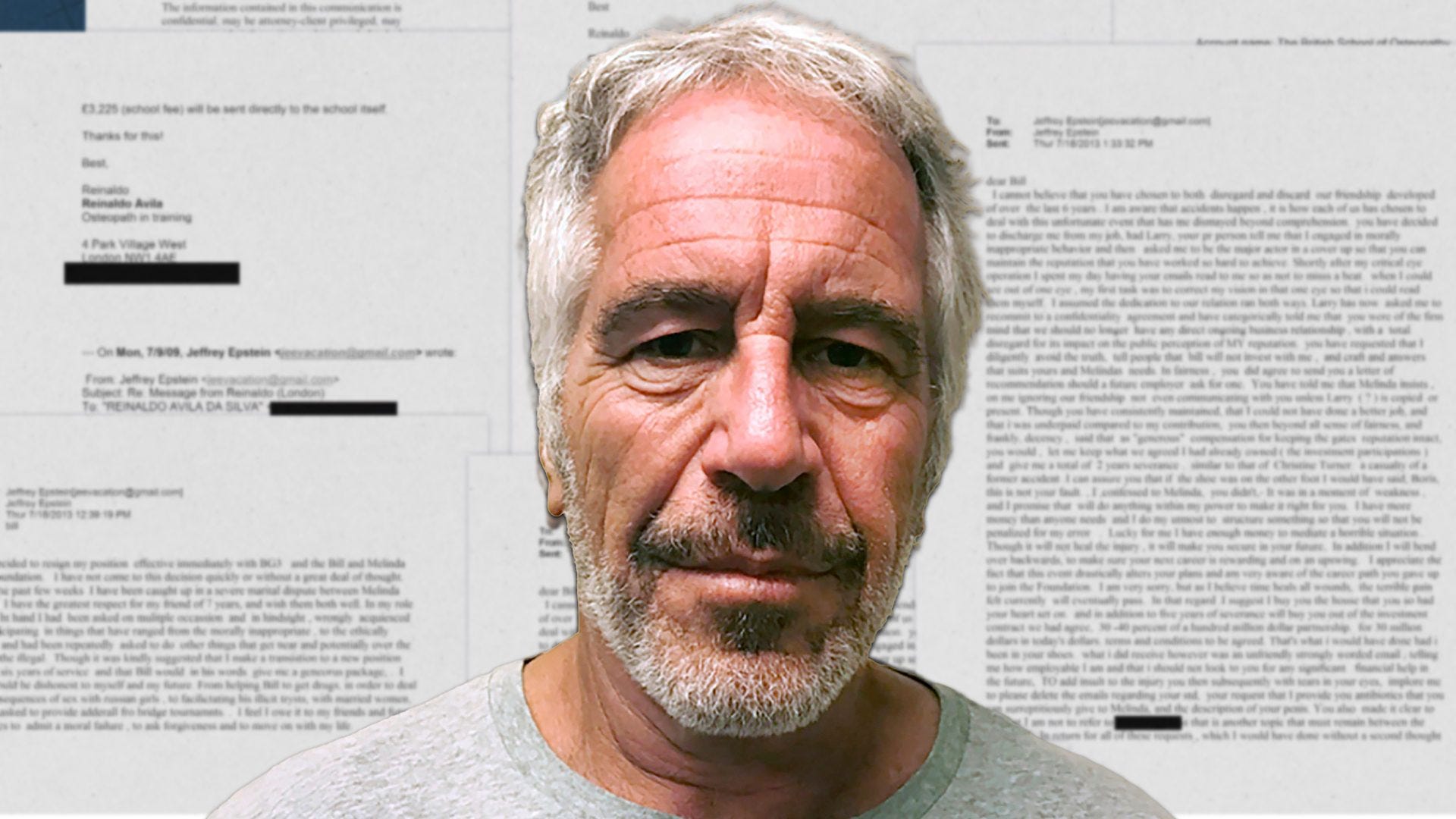
So, if I understand correctly, we are now roughly 180+ days into the grandly titled “Epstein Transparency Act.”
Marvelous.
I have seen brick walls with greater commitment to disclosure.
Having worked litigation and discovery, the entire production smells wrong. Not “I disagree politically” wrong. Not “Twitter conspiracy thread” wrong. Procedurally wrong. The kind of wrong that makes experienced litigators lean back in their chair and say: “Alright, what exactly are these people hiding?”
Because here is what one would ordinarily expect from a genuine disclosure process involving a figure like Donald Trump and Jeffrey Epstein.
Outcome one:
Trump knew Epstein. Partied with him. Socialized with him. Flew around the same social orbit of rich degenerates and Palm Beach grotesques. Perhaps he ignored obvious warning signs. Perhaps he simply did not care. But the records ultimately fail to place him directly inside the criminal enterprise itself.
Frankly, that is the outcome I expected.
Outcome two:
Trump was fully involved. He knew exactly what was happening, participated in it, benefited from it, and the records conclusively demonstrate that fact.
That would be the political equivalent of finding King Tut’s tomb beneath a Buffalo Wild Wings. One of the largest scandals in modern American history.
Instead, we get something far stranger.
He was there, but not there. Contacts existed, but did not exist. References appear, then disappear. Out of mountains of records, the public receives a bizarrely selective handful of pages, followed by the bureaucratic equivalent of a middle finger: “No further production.”
And that is where the instincts of anyone familiar with discovery begin screaming.
Because selective opacity — especially in politically catastrophic matters — does not inspire confidence. It inspires suspicion.
Ordinarily, in large-scale litigation, somebody screws up. A memo slips through. An email survives deletion. A whistleblower appears. Bureaucracies are leaky organisms staffed by exhausted underlings and resentful mid-level managers. Perfect containment is rare.
Yet here, somehow, the system behaves with the eerie discipline of a monastery protecting sacred relics.
Curious.
Meanwhile, everywhere else in the civilized world, association with a trafficking scandal of this magnitude detonates careers instantly. Criminal inquiries erupt. Political figures vanish overnight. Institutions panic visibly.
In America?
Nothing.
Not merely for Trump, but broadly across the governing class.
Which raises an uncomfortable possibility: the institutional priority may no longer be transparency or accountability, but containment.
And this is where the broader failure becomes impossible to ignore.
My own suspicion — and it is only that — is that the Department of Justice catastrophically mishandled Epstein for years. By the time portions of the government understood the scale of what they were dealing with, Epstein likely possessed immense intelligence and counterintelligence value simply because of the people around him. That does not require a Hollywood conspiracy. It merely requires bureaucracies behaving like bureaucracies: compromising principle in the name of “strategic considerations.”
Then came prosecutors who looked at the arrangement and said, correctly: “What in God’s name is this?”
So the machine lurched awkwardly toward accountability after years of apparent accommodation.
Then Epstein died in federal custody under circumstances so absurdly incompetent that half the country believes it was murder and the other half believes it merely looked exactly like murder because the institutions involved were staffed by clowns.
Neither explanation inspires confidence.
At this point, the Epstein matter has become larger than Epstein himself. It is now fundamentally about institutional legitimacy.
Because when the public concludes that elite-connected scandals receive special handling, partial disclosure, selective accountability, and procedural fog instead of transparent adjudication, people stop trusting the system entirely.
And honestly? They probably should.
The entire affair increasingly resembles a state apparatus desperately trying to manage public perception while insisting nothing unusual is occurring.
Which, historically speaking, usually occurs when something unusual is happening.
But Congress will move on shortly.
Tomorrow, it will be a slush fund scandal.
The day after that, Trump will propose nuking the moon.
Then Mars.
Then perhaps a federal yacht program in his own honor.
And the republic — exhausted, overstimulated, and permanently trapped inside the world’s loudest circus tent — will stagger onward pretending this is all somehow normal.
I’ve seen food fights better organized than this mess.
I have been fascinated to read reporting by former Boston Globe and LA Times writer Alissa Valdez Rodriguez (The Pugilist) who certainly seems to have stumbled across some very serious shit when she began some research to help the NMTruth Commission….
Epstein pleaded guilty to having sex with a girl the day before her eighteenth birthday twenty years ago. There’s still absolutely no credible evidence of anything involving trafficking or blackmail or intelligence agencies or any of the other fevered speculation.